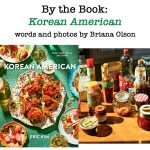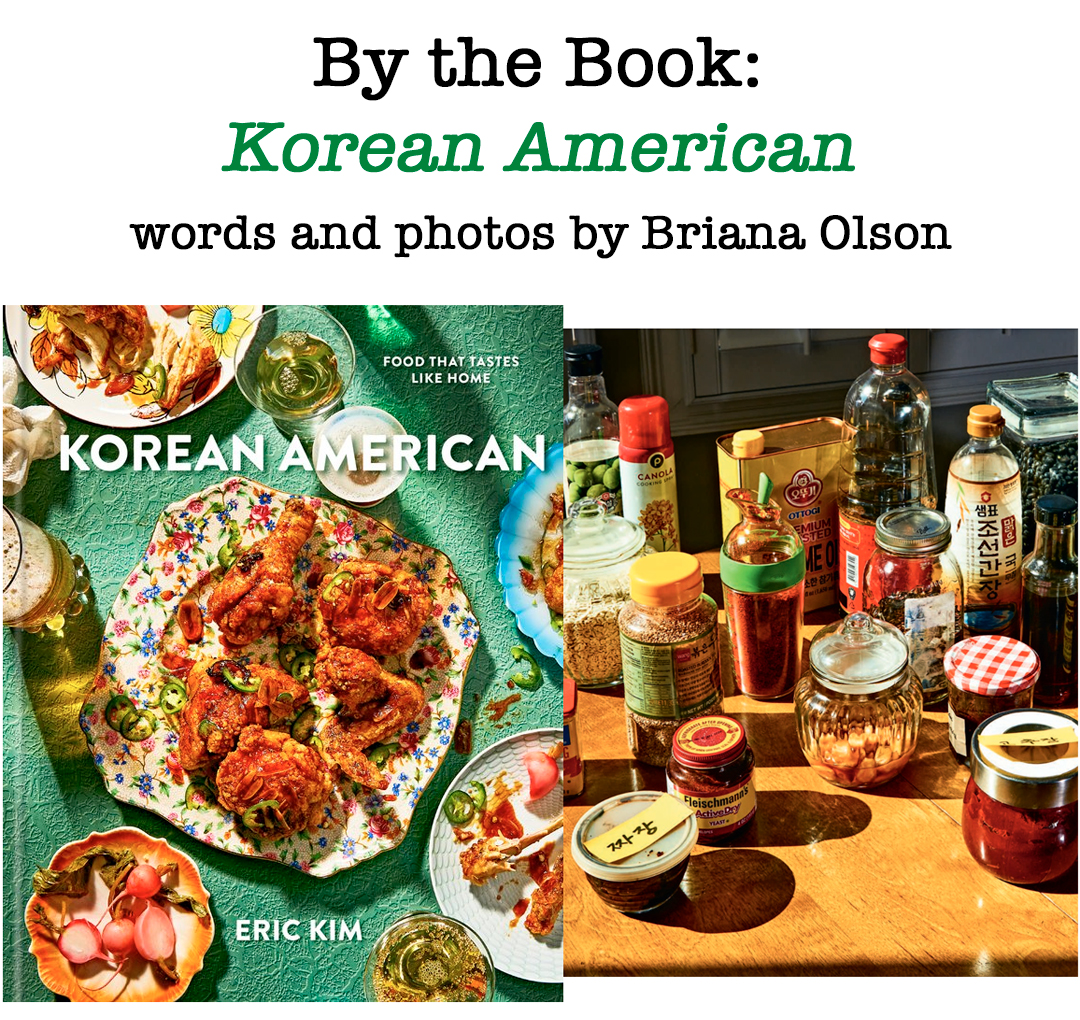
Korean American: Food That Tastes Like Home by Eric Kim
Why I was even in the Book Larder, given the number of review copies of cookbooks idling in my queue, is a reasonable question. But there I was, scanning the shelves at Seattle’s dedicated cookbook shop with metal-detector-level focus and only vaguely considering the implications any purchase might have for my luggage on the return trip. “It’s my job,” I told myself, words I’ve used to defend everything from ordering dessert to insisting that we drive twenty minutes out of the way to eat lunch at a Punjabi dhaba located in a sea of diesel truck repair shops.
I picked up Korean American idly, drawn partly by name recognition (I know Eric Kim contributes to NYT Cooking, and that he inspired my colleague at edible New Mexico to make the wise move of using gochujang in an apple pie recipe) and partly by my abiding fondness for Korean cuisine. I didn’t expect to buy it, though; for one, the “American” in the title was itself a mild turnoff. Not that I have anything against cookbooks by second- or third- or tenth-generation Americans, much less recipes that straddle culinary traditions, but I’d lately been finding myself a bit fatigued with cookbooks that lean “ish.” If I was going to add another Korean cookbook to my stockpile, I figured it should be straight-up, classic-as-it-comes Korean.
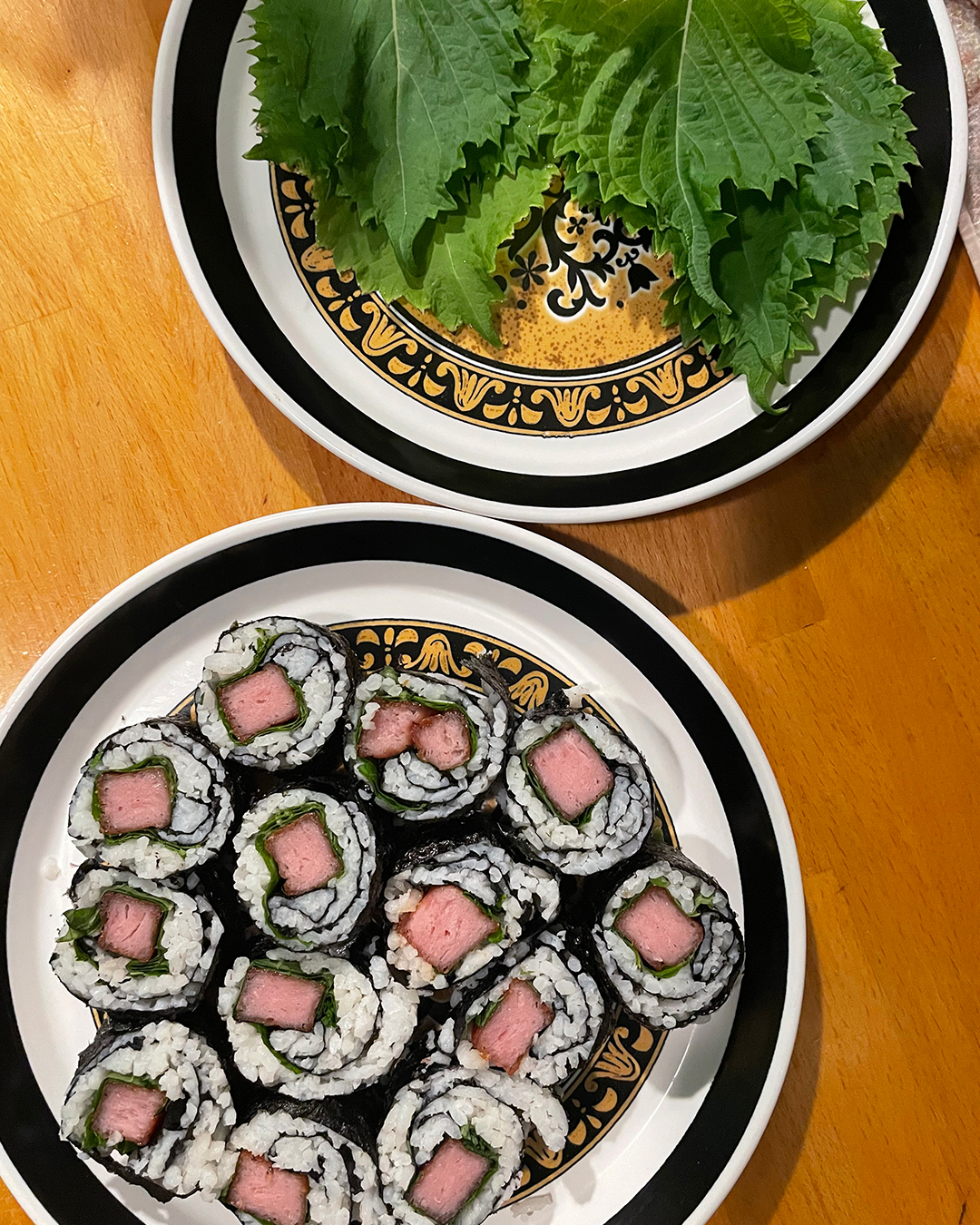
The almost too cute chapter titles—starting with “TV Dinners: Fast foods to eat on the couch” and ending with “Korean Bakery: Baked weekend projects”—were on the verge of swaying me not to buy when the book flipped open to a stunning photograph of perilla leaves basted with some kind of chile paste. As it happened, the shiso plant (a variety of perilla) in my greens bed back in Albuquerque was, at that very moment, exploding. What to do with all these delicious leaves? One answer, described in loving detail alongside said photo, is perilla kimchi. Digging further, I also found a Spam and Perilla Kimbap (or gimbap), which I would soon learn is both delicious and easy to make, along with a rice bowl with shredded perilla leaves and summer garden vegetables that I thought would be the first recipe I’d try.
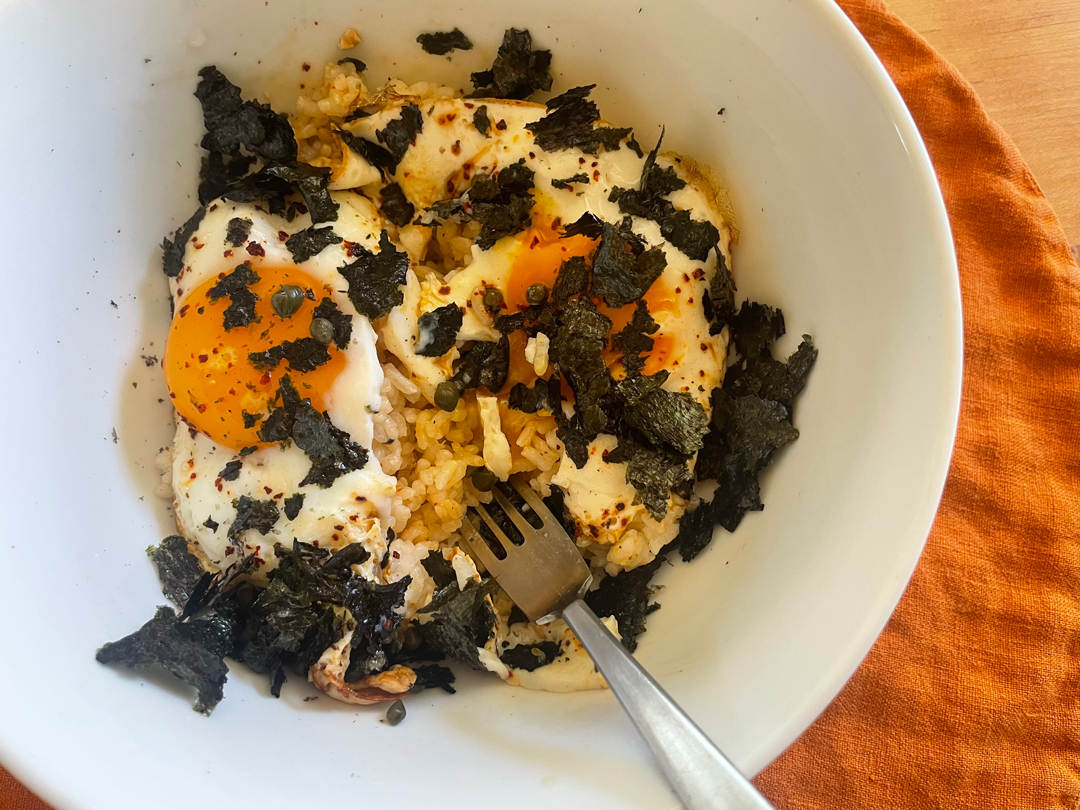
But, true to form, the first dish I made from this book was from the very chapter that I’d initially rolled my eyes at: “TV Dinners.” Scrambling for something to pull together, I realized that I had everything needed to make Gochujang-Buttered Radish Toast, one of “Three Dinner Toasts” that all seem just as suitable for breakfast or lunch. “How have I made it this far in life without gochujang butter?” I wondered aloud as I smeared the simple concoction over a slice of toasted bread and imagined using it to finish a steak. In short order, I’d followed half a dozen of Kim’s straightforward recipes, from Gem Lettuce Salad with Roasted-Seaweed Vinaigrette to Perilla Kimchi to Gyeranbap with Roasted Seaweed and Capers. “If you’re Korean, then it’s likely you already know that mixing fried eggs, soy sauce, and sesame oil into a bowl of white rice tastes bomb,” he says by way of introducing the latter—and it’s true.
As with most any cookbook, there are recipes in Korean American that don’t speak to me: I’ve yet to make a kimchi sandwich, and I’m not sure I will, mostly because I’ve never been that thrilled with the type of soft, crustless sandwich that I associate with British high tea. Same goes for the omurice-like tomatoey omelet—I just can’t get down with most bottled ketchup. But as the weather cools, I’ll definitely try my hand at Kim’s Kimchi Jjigae, from “S Is for Stew: The Korean art of gentle boiling.” One thing that keeps me coming back is that so many of the recipes here involve components (hello, gochujang butter) so simple and perfect that I’ve already started to spread them around. And the book’s clear, open, abundantly accessible style, with its cute titles and textured photography, has grown on me. I’m already looking forward to pulling off something holiday-worthy from “Feasts” (arguably the most fusiony of the book’s chapters, with recipes for things like Cheesy Scallion Stuffing and Lasagna with Gochugaru Oil).
Kim is not a professional chef or someone who came up in restaurants. Instead of the CIA, his culinary guide is his mom, Jean, with whom he developed many of these recipes (credit for the perfect jar of kimchi goes to her) while holed up in their family home in Atlanta during the pandemic. Maybe that’s why his sense of volume is so finely tuned to the reality of most American households—which trend increasingly small, such that a serving for two or four is far more practical than a restaurant platter. Maybe that’s also why Korean American is not a technique cookbook; sure, there’s teaching here, but it’s offered up in the way of casual kitchen hacks rather than something belonging in a guide culinaire. And while some of these recipes take time, Kim favors dishes that can be pulled together with leftover rice or baked in twenty minutes, or dishes, like those dinner toasts, that are quick to make but never boring. Most importantly, his recipes work—and whether you grew up eating this food or are only now discovering it, Korean American will jazz up your weeknight dinners, no question.
Who’s Your Source
Most of the ingredients listed in “That Boring Pantry Section in Every Cookbook, but More Fun” can be found in the Seoul, Busan, and Tokyo aisles at Talin Market in Albuquerque. That includes maesil cheong (green plum syrup), sheets or snack packs of roasted seaweed, and the medium-grain white rice called for in Perfect White Rice. Spam, featured in a handful of dishes including Budae Jjigae, or army-base stew (canned meats and instant noodles owing their place in Korean cuisine to the 1950s war era), can also be found there. Talin stocks fresh perilla leaves and other specialty produce, though it’s worth noting that most produce called for in Korean American can be found at nearly any supermarket.
Albuquerque also has two Korean-owned markets, A-1 Oriental Market on Montgomery and A-Ri-Rang on Eubank. These are the only local spots where I’ve confirmed availability of flying fish roe, and both also sell a variety of housemade kimchis. At A-Ri-Rang, you can also sample some classic Korean stews, whether to compare to your efforts or to find out whether they’re dishes you even want to try to make.
The Santa Fe Asian Market, while less comprehensive, offers most of what you’ll need for these recipes.
Not least, there are a few local makers whose products are so much better than their mass-produced counterparts: NM ChileJang makes cottage-style gochujang with New Mexico chile, and MiYoung’s Farm makes wonderfully crispy kimchis that have an impressive shelf life.

Briana Olson
Briana Olson is a writer and the editor of edible New Mexico and The Bite. She lives in Albuquerque.