After I moved to Santa Fe in the 1980s, I found a social milieu unlike any other. Residents and out-of-towners alike frequented the gallery scene, Santa Fe Opera, Indian dances, theater productions, spiritual gatherings, art festivals, and live music performances of all genres. Revelers and seekers mingled across economic, racial, and political lines. The culture had an eclectic, liberal 1960s feel, along with an earthy sophistication. Although the very contemporary Café MoMo and its sister gallery, MoMo Santa Fe, are products of their own unique cultural synthesis, when I learned the owner, Moriah Stanton, grew up living in a school bus, I imagined she’d been spawned from this legacy.
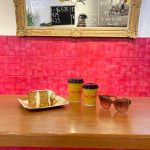
I discovered the café through the gallery, which I visited on the recommendation of a high-styling friend. MoMo Santa Fe struck me as a lifestyle store, specifically the lifestyle that an art-loving, nature-worshipping, trailblazing, tastemaking multiculturalist might enjoy. And if the gallery is overflowing with art, jewelry, and fashion, the white-walled café next door, with its simple lines and singular focus, is its ideal meditative pairing. My idea of a perfect afternoon: kicking back at the hand-painted, fuchsia-tiled espresso bar with a specialty coffee drink while watching one of my besties (or a total stranger, for that matter) model selections from the gallery’s impeccably curated apparel and bijouterie.
As Stanton tells it, her dad raised his kids among artists, largely off-grid and in various locations, including Mazatlán and Puerto Vallarta, where she became fluent in Spanish. As a young adult, she cut her teeth in the high-end restaurant business, working every position from busser to manager in New York City, the Hamptons, Martha’s Vineyard, Taos, and Santa Fe. Known as Mo since childhood, MoMo was the nickname line cook Jose Gonzales called out when her orders were up at the ever-popular Love Apple, a farm-to-table restaurant in Taos. Although she was dedicated to the hospitality industry, her artistic side sought expression through jewelry design, fabrication, and metalsmithing. Stanton opened her first gallery, MoMo Taos, in 2016, featuring jewelry (from her own line and that of others), along with the work of local potters and fine artists. MoMo Santa Fe followed six years later, with Café MoMo emerging in 2025.
Although Café MoMo is right in step with the chic environs of downtown Santa Fe, it is fundamentally an homage to Stanton’s father and the visionary matriarchs behind the exceptional organic single-origin brew the café is becoming known for. “I came to understand coffee as a ritual by watching my father prepare it,” Stanton explained. “Every morning, he hand-ground high-quality whole beans, brewed them in an exquisite French press, and took the time to enjoy his coffee. From a very young age, I understood that coffee is intentional, sensory, and deeply pleasurable.”
In laying the groundwork for the café, Stanton turned to a part of the world she knew well. As a jeweler, she’d been sourcing emeralds from Colombia for close to fifteen years; naturally, she’d learned a bit about the country’s esteemed coffee-growing traditions along the way. She started by calling the National Federation of Coffee Growers of Colombia in NYC. “They basically told me to take a hike,” she said, laughing. She proceeded to email the federation’s headquarters in Bogotá and was warmly received. They arranged coffee farm tours for her in Pereira and Cundinamarca, leading to a connection with Alejandra Hernandez from Finca Asturias.
As soon as Stanton visited Hernandez’s multigenerational, woman-owned-and-operated farm, she knew it was THE ONE. “This is a family farm that has been around for a few generations and growing coffee since the 1970s, and within all of that time—they grow fruit too and have a small amount of livestock for the fertilizer—they have never once sprayed any kind of chemical on their plants,” she said. “The soil is pristine, and, according to them, ‘If we take care of the earth, the earth will take care of us.’”
Struck by this idyllic picture of Colombia, I couldn’t help but ask her about media portrayals of the region as a dangerous place for travelers. “Colombia is very welcoming and fairly easy to navigate if you have a decent command of the language,” Stanton asserted, adding that she always feels safe in both rural and urban areas and frequently brings her eight-year-old daughter along, much to their mutual delight.
Years of high-profile wine tastings, plus coursework she completed through the American Sommelier Association in New York, refined Stanton’s understanding of the parallels between wine and coffee. “People forget that coffee is a fruit,” Stanton explained. “The terroir of coffee is just as nuanced as the terroir of grapes. Although the quality of our beans is always consistent, our gentle roasting method allows natural variations to come through in the flavor profile. Our coffee will never taste exactly the same from season to season, and that’s the beauty of it.”
Stanton’s laser-like focus and service ethic are immediately apparent. She’s frequently on-site, conferring with staff and engaging with customers, leading with the assurance of someone who has built their business from the ground up. “I was trained to put customer service first and foremost. It is very important to us that we welcome you warmly. I worked in some great restaurants in my life, where I also learned the importance of sourcing and quality, without a doubt.”
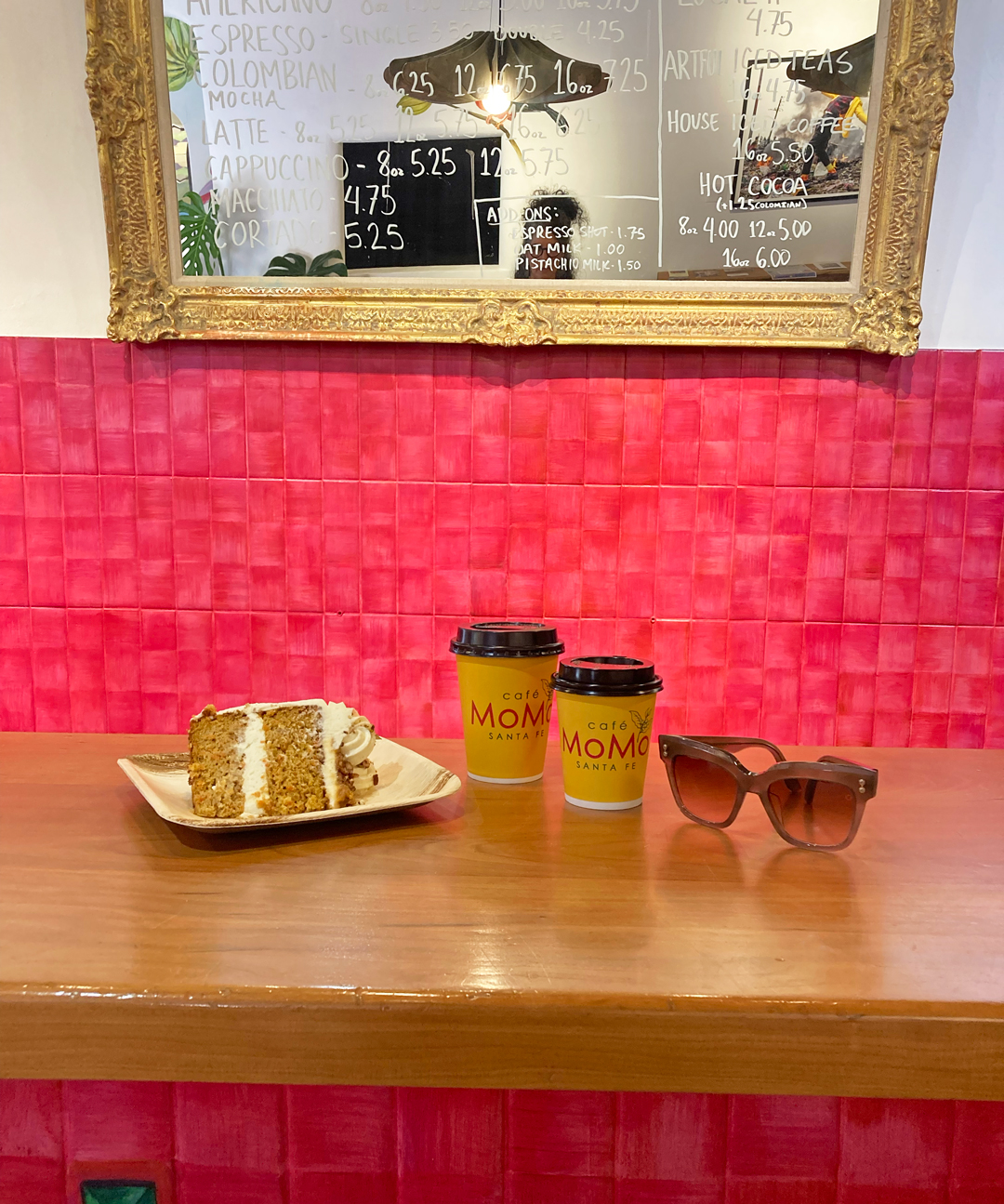
Indeed, Mars, the barista who welcomed my friend and me into the café, couldn’t have been more gracious. They carefully explained the menu options to us and offered us filtered water to drink with our selections.
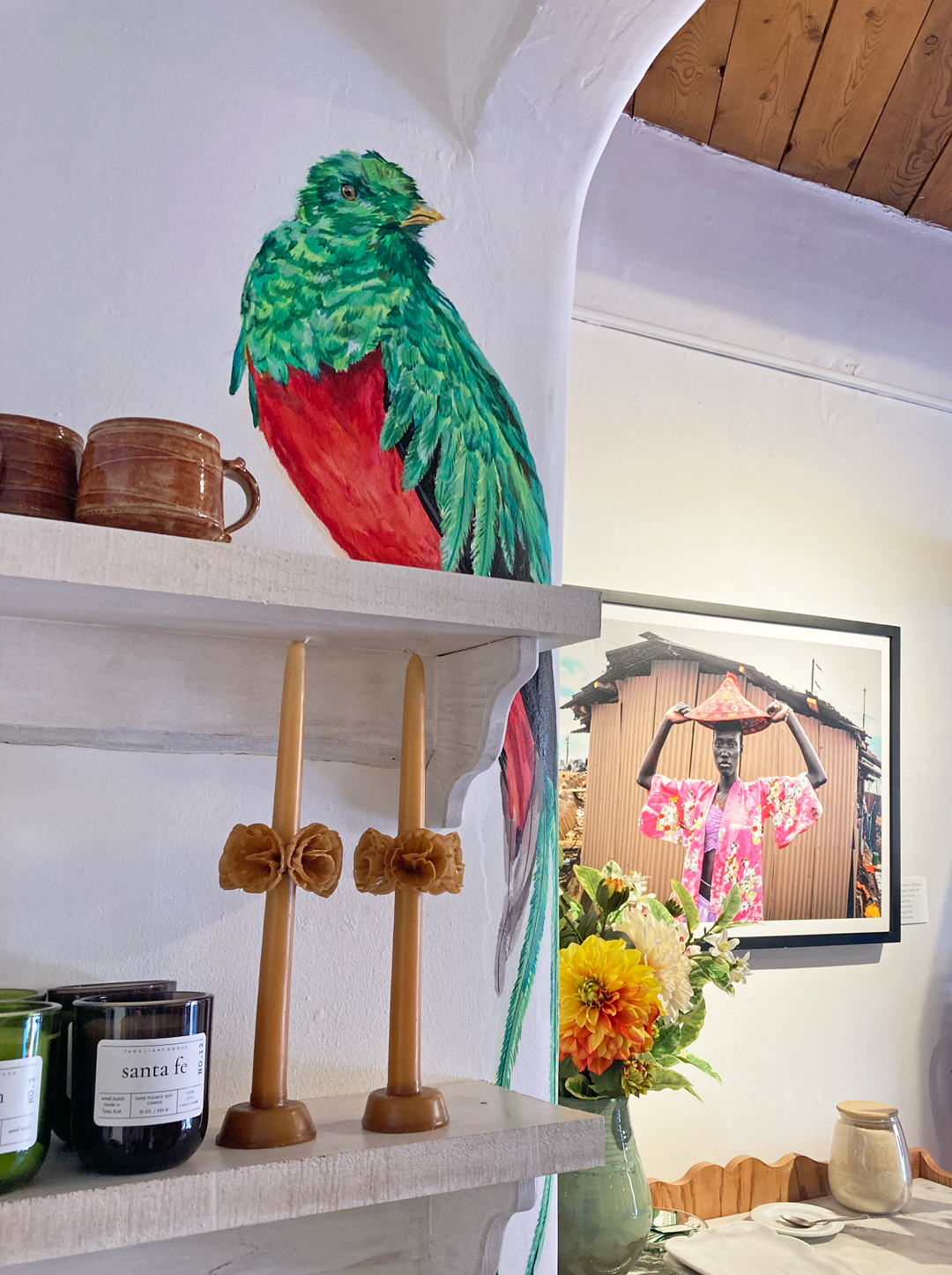
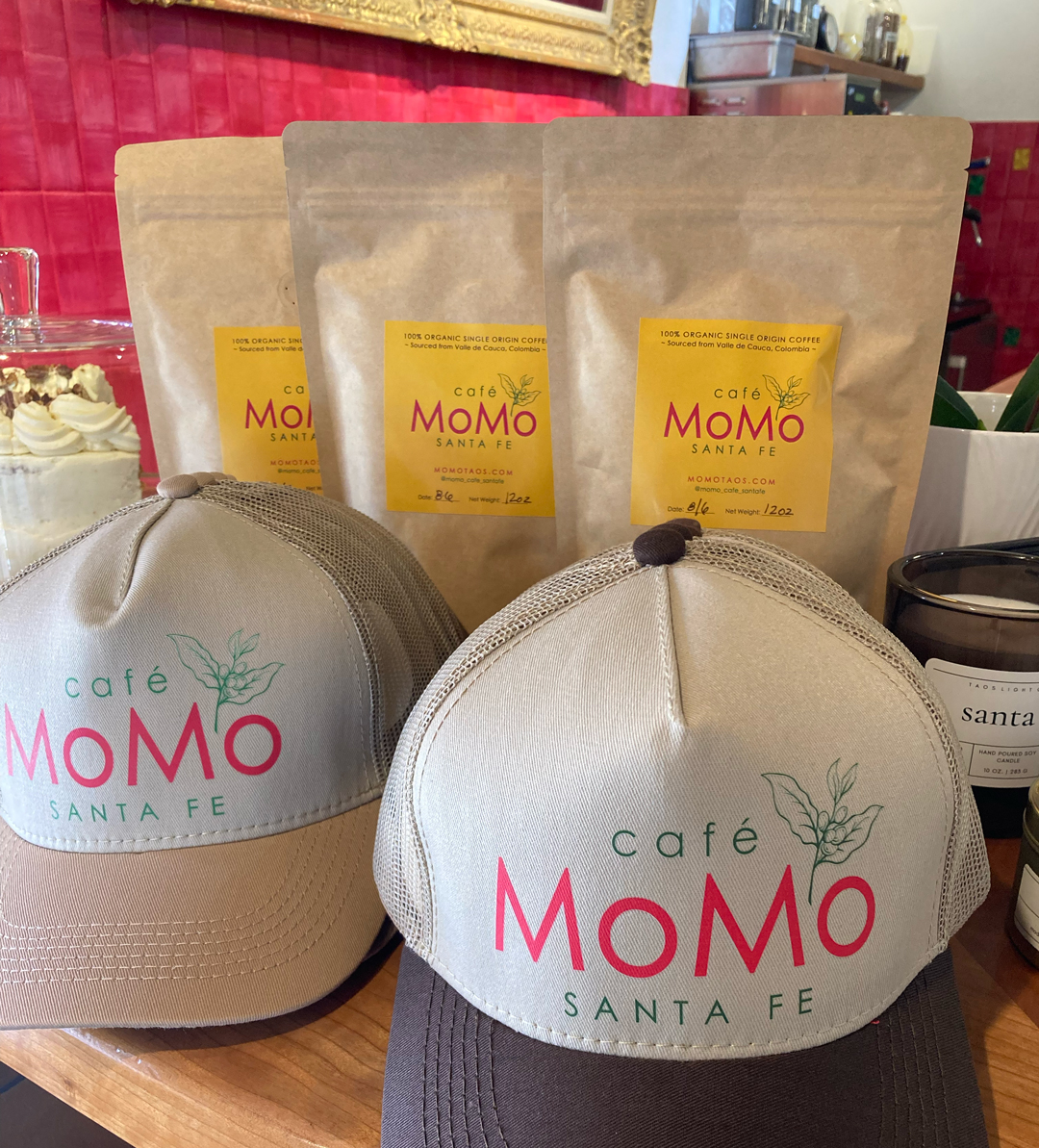
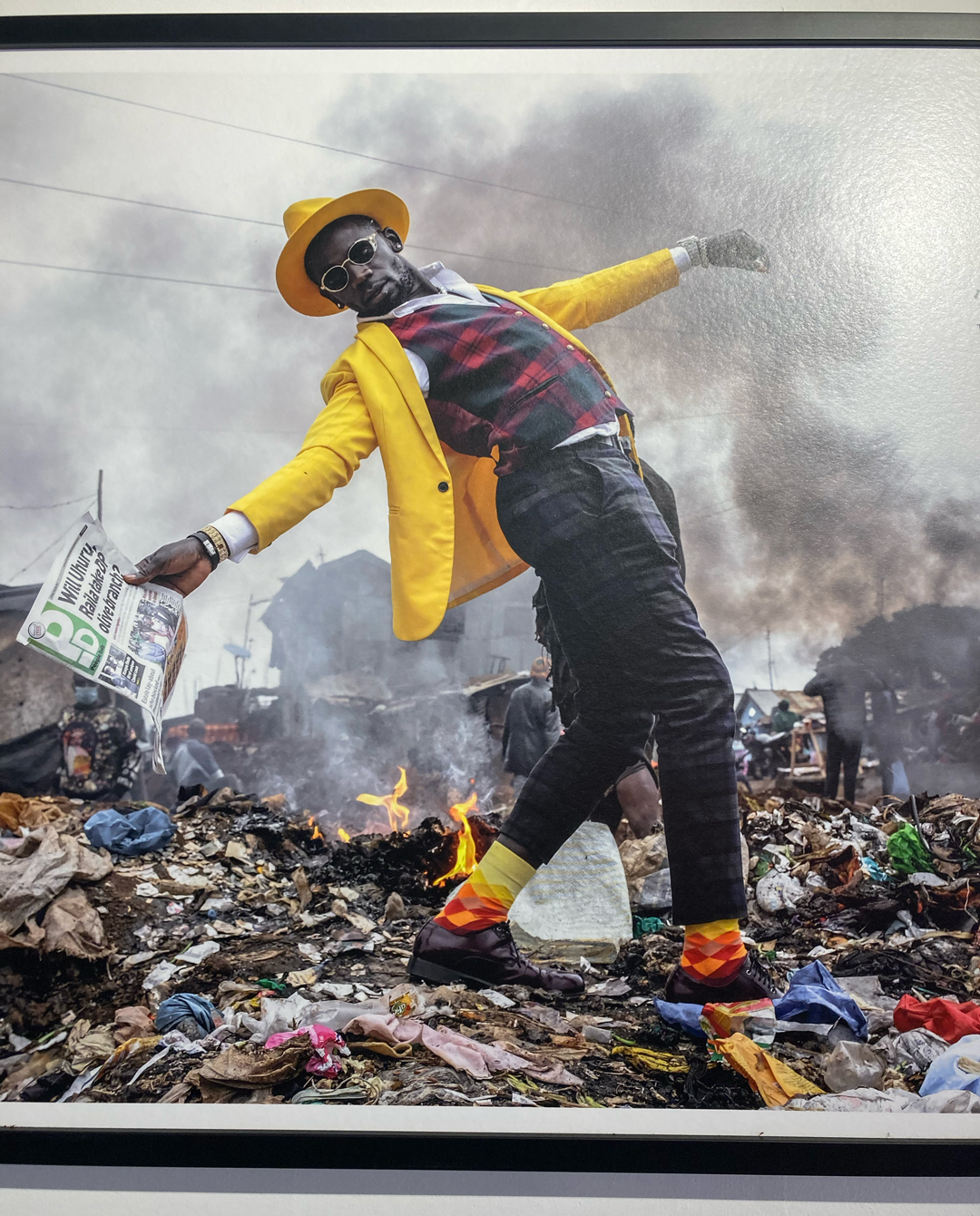
Café MoMo has indoor bar seating and a charming corner banco with a table near the door. Three striking photographic portraits by award-winning Kenyan documentary photojournalist Donwilson Odhiambo punctuate the space with vibrant color; wall frescoes by local artist Kristin Bortles add a tropical touch. Local and imported high-end candles and ceramic cups are displayed on shelves, available for purchase along with packaged coffee beans from Finca Asturias.
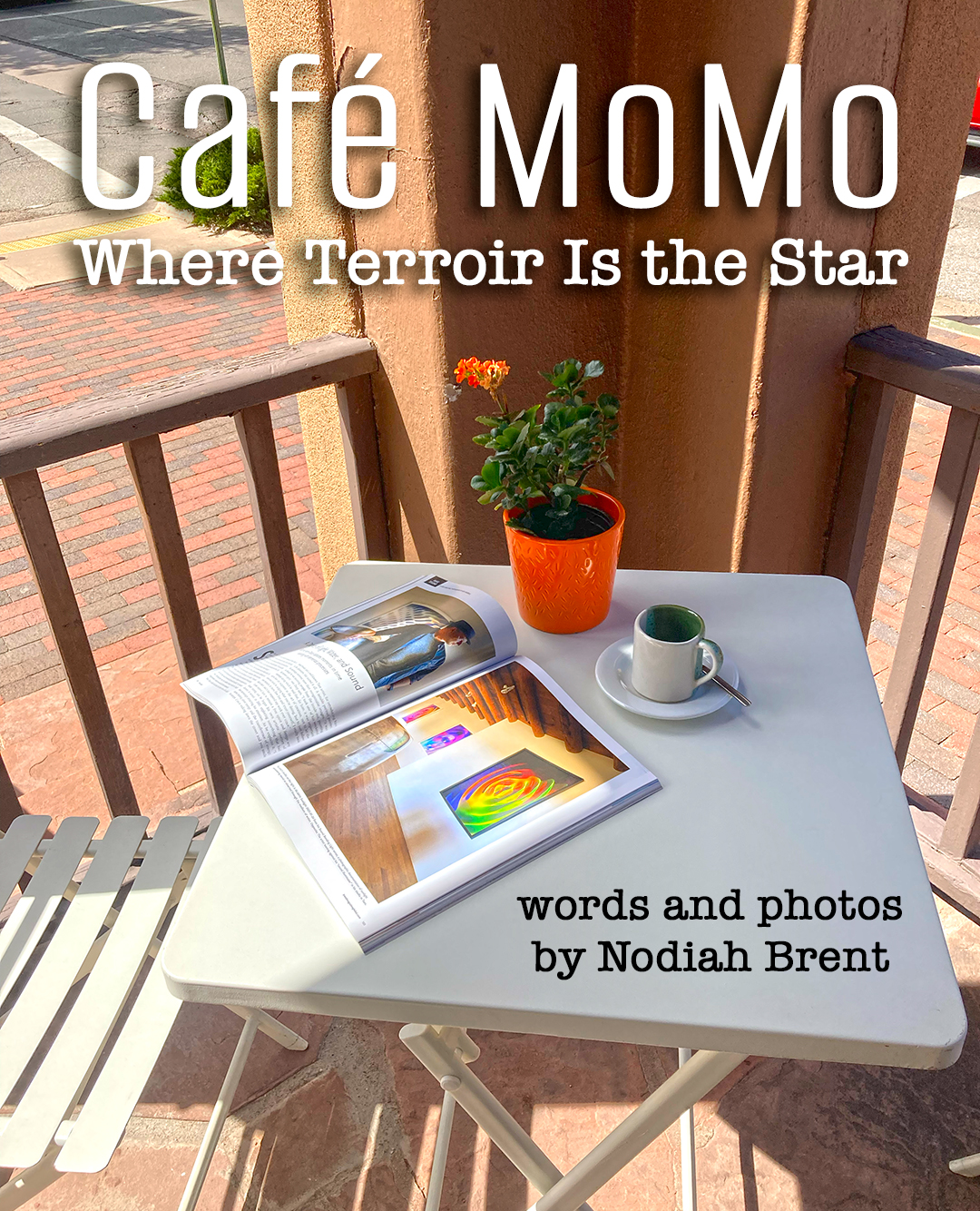
The café’s red-brick portal is elevated above the street, perfect for people-watching. Small tables with bistro-style folding chairs accommodate preferences for sun or shade, protected from, yet privy to, the action on the lively southeast corner of Marcy and Lincoln. My friend and I wound up sitting alfresco for four hours, enlivened by gluten-free carrot cake, cappuccinos with pistachio milk, and an intriguing flamenco playlist that kept our ears happy. The carrot cake, provided by James Campbell Caruso’s acclaimed restaurant, La Boca, was moist and cloudlike; we luxuriated in the succulent cream cheese frosting carried aloft by a lightly spiced crumb.
The creamy mouthfeel of our cappuccinos satisfied a shared appreciation for opulence. The earthy, nutty, slightly citrusy brew paired perfectly with the pistachio milk’s richness. A pleasant, balanced aftertaste attested to the purity of the product, prompting my normally decorous friend to softly proclaim, “This is really fucking good.”
“Café MoMo’s menu centers around two Colombian varietals from Finca Asturias, each roasted and prepared differently,” Stanton explained later via text. “Pink Bourbon, a rare, demanding high-altitude varietal named for the salmon-pink color of its ripe cherries, is medium-roasted and served as our hot drip and iced coffee; its flavor is beautifully floral, with notes of ripe stone fruit, red berries, and bright citrus.”
The second varietal, Castillo, is prepared with a medium-dark roast, resulting in a full-bodied espresso with “notes of toasted almond and dark chocolate, lifted by a bright, tangy hint of passion fruit—a perfect base for our specialty coffees,” Stanton said. They use pure organic cacao and organic panela (an unrefined Colombian cane sugar) for their signature Colombian Mochas; the Colombian Rose Mocha contains organic damask rose powder. All specialty drinks are available hot or iced.
Tea drinkers can find offerings from local purveyor ArtfulTea, as well as high-quality Japanese matcha and hojicha.
“I try to use the best of the best,” Stanton says. “It’s all in the details.”
📍145 Lincoln Ave, 505-692-4157

Nodiah Brent
Nodiah Brent is a writer, copywriter, and songwriter living in New Mexico since 1981, perpetually enchanted.