Admission: I don’t particularly like the buffet—not even the most widely loved of all buffets, those at Indian restaurants in the United States. This can make me a disagreeable dining companion, one who either grumbles about caving to the pressure to “just get the buffet” or who insists on ordering off the menu even when no one else at the table is doing so. The upshot is that I tend to pay attention to the parts of the menu that rarely if ever make it into the warming trays, which happens to include an array of intriguing dishes alternately identified as snacks, chaat, appetizers, and street food. These dishes—even samosas and pakora, the most familiar among them—are best when served fresh and eaten immediately, making them not exactly buffet friendly. But that is only one reason for their marginalization—and, for me, their appeal. Because, aside from the difficulty in encapsulating them in a discrete English-language category, what has most attracted me is that many of these dishes, in layering unexpected textures and temperatures, have been known to elicit words like interesting or even gross from some diners.
Don’t get me wrong—I love makhani and korma, rogan josh and palak paneer, all the rich, complex sauces of northern India, and I think they deserve the same respect that has lately been given to mole. As a New Mexican living in the Pacific Northwest, vindaloo was long my go-to, its fiery zing helping to fill the void of red chile. In the Bay Area, I got into the lively mouthfeel of chaat like bhel puri. But once back in Albuquerque, where the Indian dining scene still leans heavily toward buffets—and you’re more likely to be presented a rant on the dearth of passable restaurants than to receive an enthused recommendation on where to get Desi street food—I found myself eating Indian food only occasionally.
My renewed interest in Indian snacks began at Tikka Spice, the once-roving food truck now in permanent residence at High and Dry Brewing in Nob Hill. Although a fair bit of Tikka Spice’s fare borrows from Mexican and American—tacos, loaded masala fries—owner Basit Gauba started by taking inspiration from Pakistani street food. “Chaat literally means to lick or to taste. It will be so good that you will be licking your fingers afterward,” Gauba explained in a 2022 Q&A with edible New Mexico. Describing their samosa chaat, he said, “We load it with our chickpea curry, yogurt sauce, mint sauce, red chile chutney, tamarind chutney, pico, cilantro, and crispy chickpea noodles. It’s sweet, spicy, tangy, creamy, savory, crunchy in every bite.”
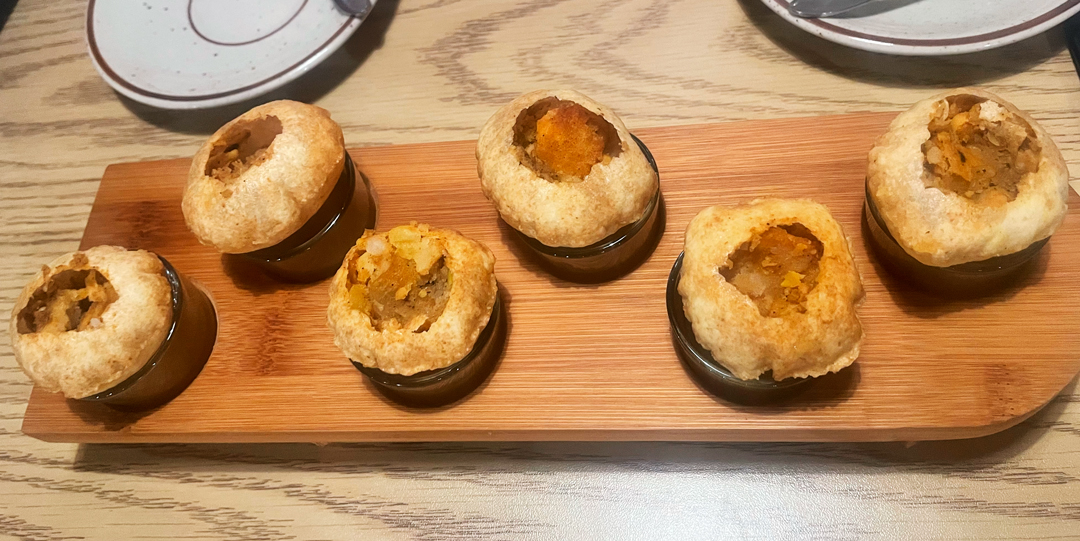
Almost by accident, I later discovered chaat on the menu at the Taste of India, a restaurant that shares an unassuming strip mall near Juan Tabo and Indian School with a massage parlor, a toy store, and Moons Coffee & Tea. I started with pani puri: a tray of crispy, hollow wheat puffs filled with tamarind, potato, and chickpea and perched atop shot glasses filled with the seasoned water quintessential to the dish. I hesitated before emptying one of the shots into the hollow of a puff—was I doing this right?—and devouring it in a single gesture: a crunchy bite that is also a cooling sip. A server passing by commented on the fun of eating pani puri in Delhi, where you can find a wide (and wild) variety in flavors of the pani, or water. Like a shot of booze (which some experimentally minded chefs have taken to serving in place of the water) or an amuse-bouche, pani puri’s pleasure is ephemeral; unlike Chinese soup dumplings, it will not burn your tongue, because the water is served at room temperature.
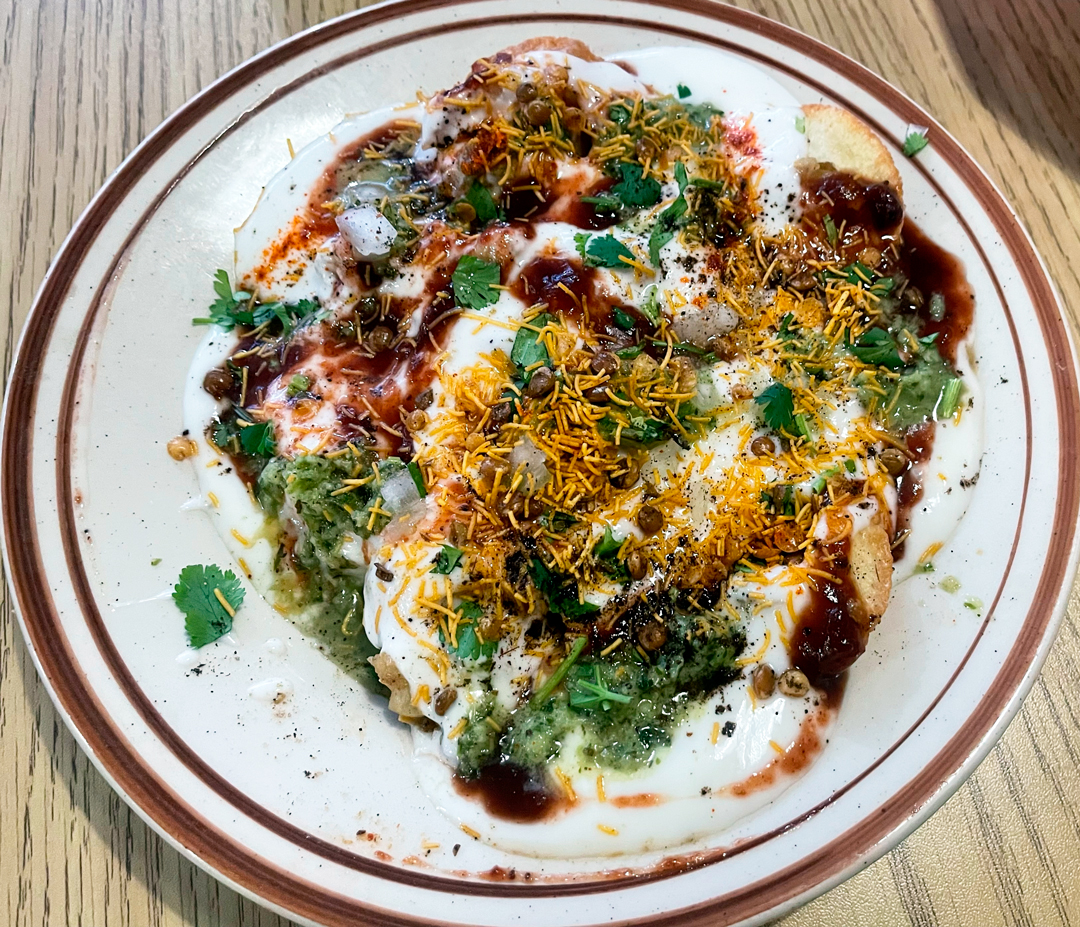
On another visit to Taste of India, prompted by our server, I agreed to give the lunch buffet a go—but not without ordering some chaat first. (I will say that of the local buffets I’ve sampled in the past year, theirs ranks highly, with a lovely saag paneer, delicious dals, fresh and crispy pakora, and excellent naan served table-side, to order.) “This is delicious,” my friend said as we dug into the bhalla chaat papri, a mix of lentil fritters and cracker-like wafers, smothered with whipped yogurt, green and tamarind chutneys, spices, fresh cilantro, and a smattering of crunchy elements including fried lentils and thin dry noodles known as sev. The surprising cold and lightness of the yogurt contrasts with the faint warmth and density of the fritters; the flavors are a mash-up of sour, aromatic, savory, and sweet.
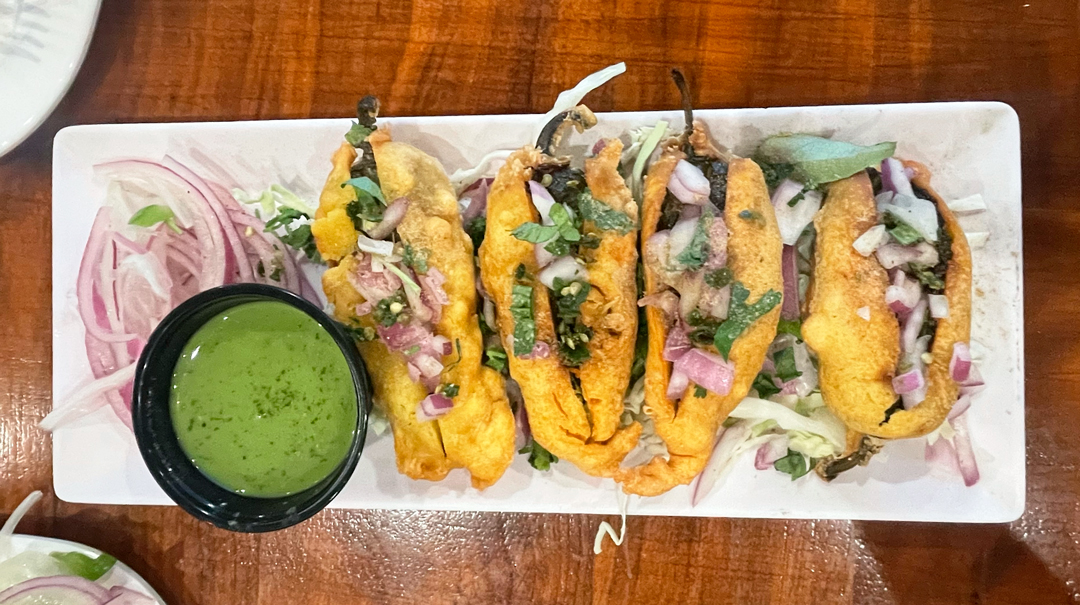
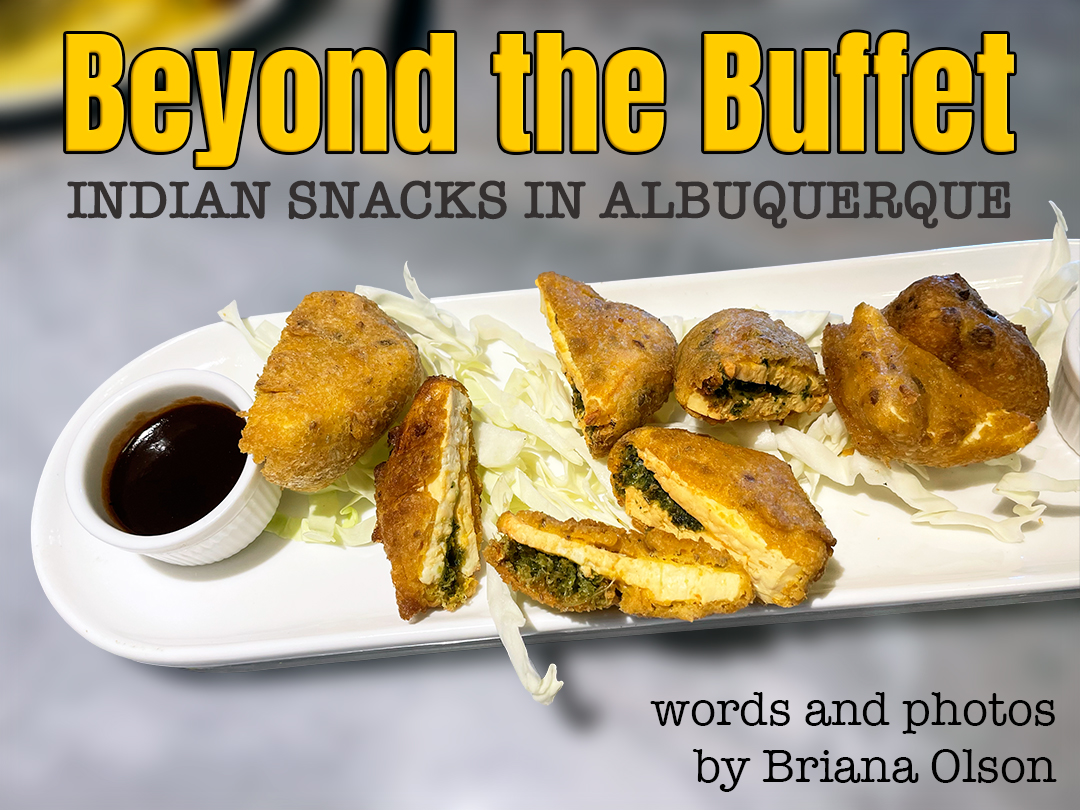
The more I looked, the more it seemed that Indian street food was everywhere. Even Taj Mahal, whose buffet has been introducing Burqueños to curries and masalas and tandoori chicken for thirty years, includes some chaat among their appetizers. Royal Hyderabad boasts not one but two appetizer menus—one “veg” and one “non-veg,” or one “appetizers” and one “chaat” at their Westside location—with even more snacky dishes nested in a section labeled “South Indian Specials.” From mirchi bajji, stuffed chiles whose breading has the heft of chickpea (a.k.a. gram) flour, to crispy cauliflower in Manchurian sauce to vegetable samosas, my first sampling of their snacks was also a map of culinary intersections: The samosa traces its origins to Persia, Manchurian is shorthand for the influence of Chinese immigrants in India, and while mirchi bajji—stuffed after cooking—is usually tied to the southern state of Andhra Pradesh, chiles were introduced to India by Portuguese traders in the sixteenth century. At Curry Leaf, the lengthy app menu also leans into “Chinese stuff,” as one server put it (e.g., a chilli paneer served in sweet and sour sauce; chicken lollipops) along with South Indian snacks like mendu wada—and, of course, many kinds of pakora.
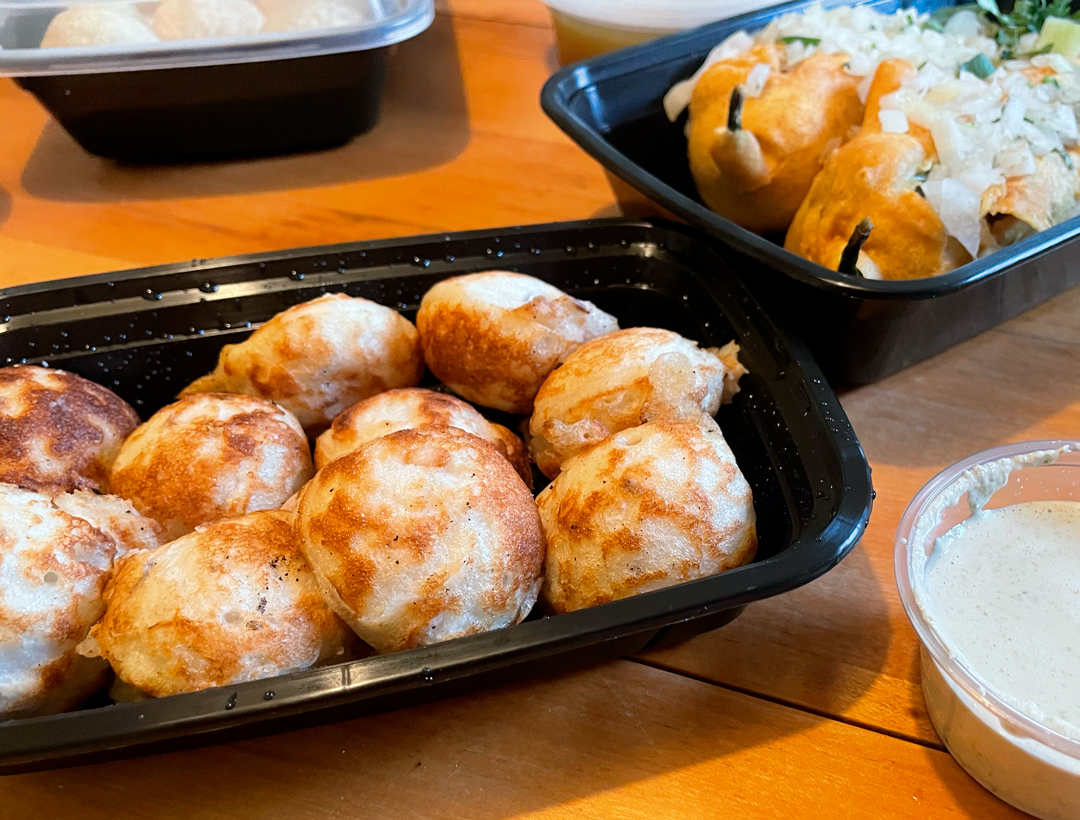
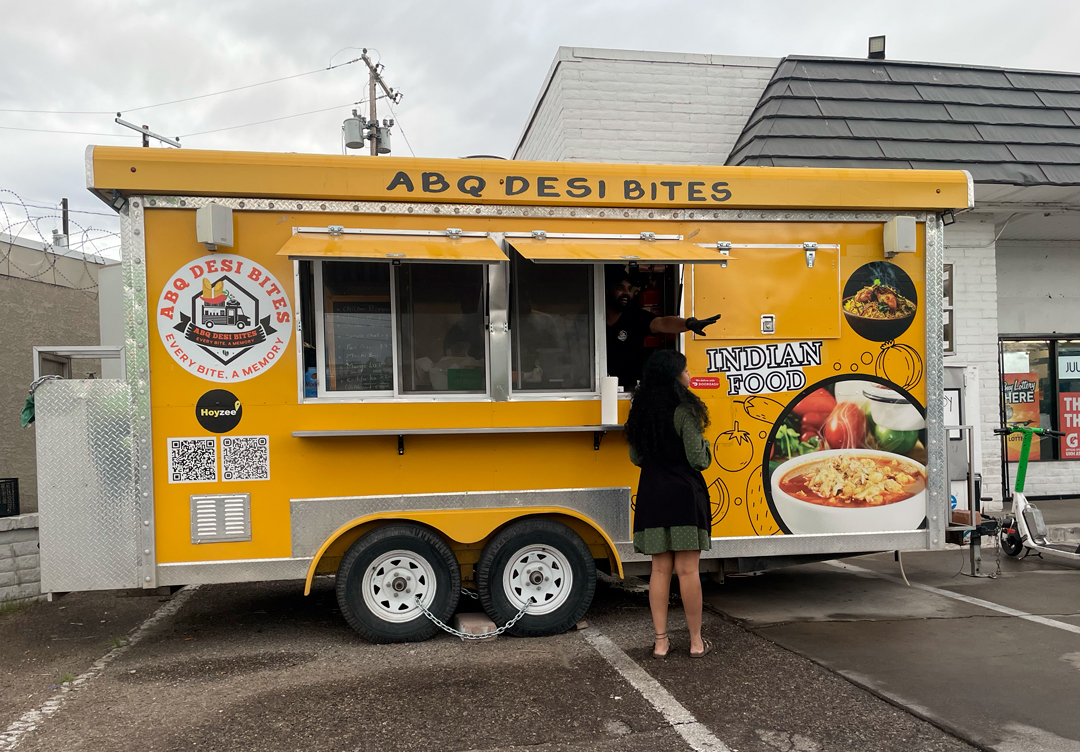
No story about street food in the US would be complete without a food truck in a random parking lot, so when the words “ABQ Desi Bites” caught my eye, I made a sharp turn, even though the truck bearing the sign was stationed in the not-at-all-scenic parking lot of the Quick Track on Lomas and University. While the drive-through traffic is far from reaching Golden Pride levels, I watched a steady stream of customers come through while I waited for my order and mused on the business’s tagline, “Every bite, a memory.” The menu, at a single page, is modest in comparison to many an Indian restaurant’s, but expansive for a food truck, ranging from tiny fried dumplings made from leftover dosa batter (ponganalu) to mirchi bajji, dosa to uttapam, and even momos—billed as a Nepali special. Tip: Pani puri ordered to go requires more skilled assembly than your usual take-out dish, so plan accordingly.
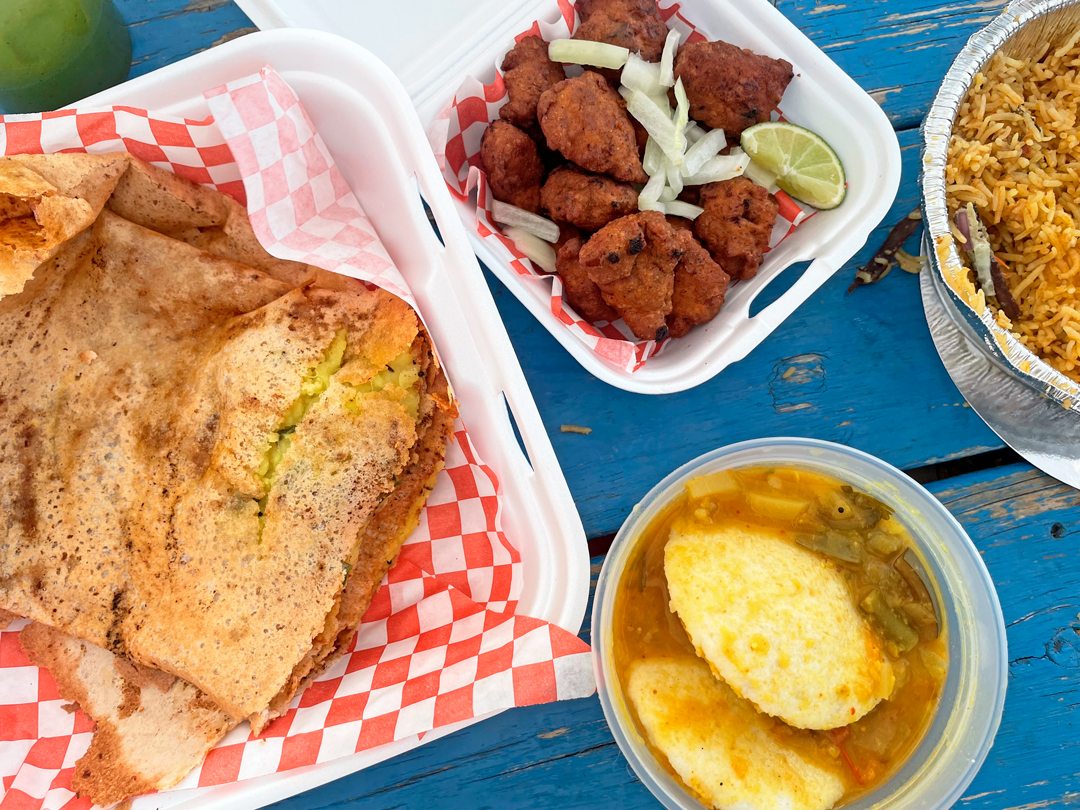
My last stop, in true New Mexico style, also neighbors a classic American convenience store. Stationed on the parking lot side of the ABQ Food Park near San Antonio and Louisiana, Vada Chennai is all about South Indian dishes—think dosa, uttapam, and delicious biryani. My tablemates eyed my idly sambar with curiosity, or maybe suspicion: two fat steamed dumplings floating in vegetable soup, with its characteristic notes of tamarind, fenugreek, and coriander. Soft as the idly were, they held up, absorbing the distinctive flavors of the sambar. More familiar (at least in appearance) was the Chicken 65: spicy bites of marinated fried chicken that may or may not have been named for the year the dish first appeared on the menu at the Buhari Hotel in Chennai, the capital of Tamil Nadu.
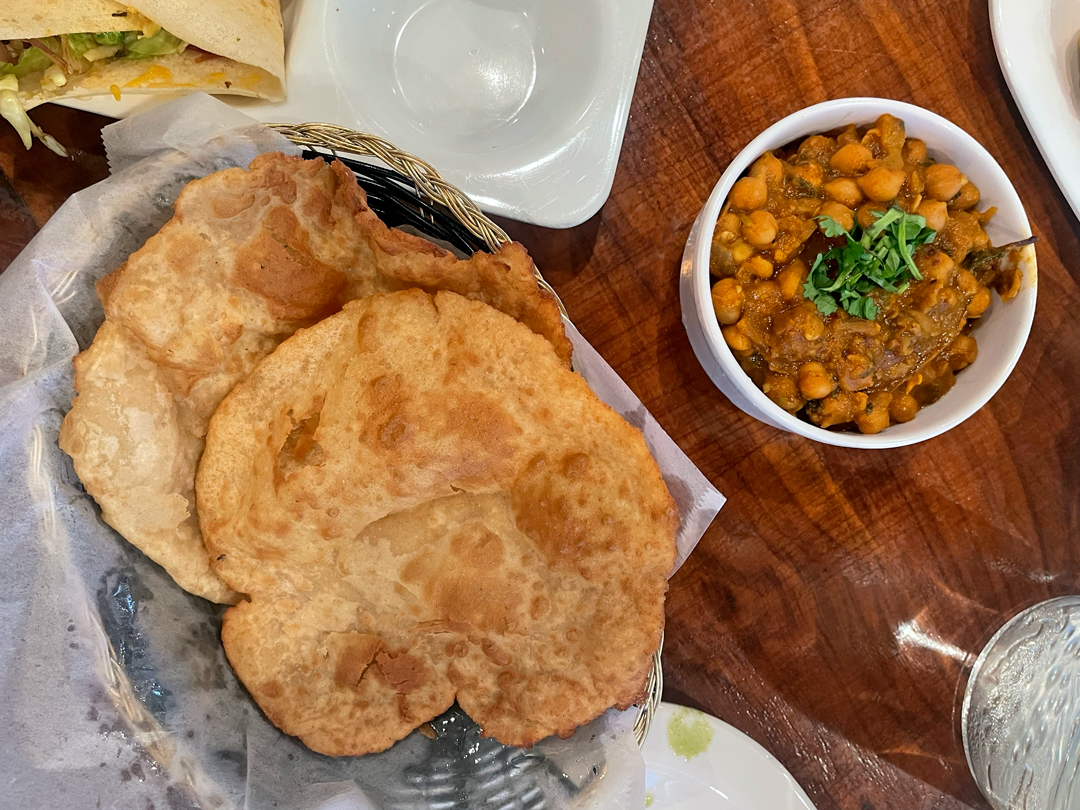
Aside from satisfying a craving and introducing me to some new foods (chole poori was the surprise hit), this minor snack tour has reiterated the vast range of Indian cuisine—so much so that I’ve wondered, at times, if it even makes sense to speak of such a thing as “Indian food.” But it’s also opened me back up to eating Indian food locally, despite what the critics (non-Indian and Indian alike) may have to say about what is available. I’ll keep you posted as I make my way from the periphery of the menu back to the center. Already, though, I’ve found myself turning to the underappreciated dishes at the other end of the menu: dessert.
Note: The ABQ Food Park closed shortly after this was published, and its resident South Indian food truck Vada Chennai followed suit.

Briana Olson
Briana Olson is a writer and the editor of edible New Mexico and The Bite. She lives in Albuquerque.