The Arabesque Table: Contemporary Recipes from the Arab World
by Reem Kassis
I don’t know why more modern cookbooks aren’t structured by ingredient. At first blush, this approach might seem impractical, especially if you’ve deeply ingrained the Western convention of courses or tend to build every meal around a main. But if you’re working from what you have on hand (which I frequently am), the key ingredient is a good place to start. The same goes if you’re pulling together a meal based on what looks most wonderful (or, let’s be straight, the least wilted and mangled) at the market or in the produce section. In truth, though, my appreciation for this style has more to do with joy than pragmatism (or than the desire to master cabbage). Besides, I like the way it upends menu planning, opening the possibility for a meal that has no center.
In the case of The Arabesque Table, Reem Kassis uses this framework to lean into story, simultaneously breaking down the core elements of Levantine cooking and studying the path of those, like the eggplant, that are not native to the region but have become integral to the cuisine. Along the way, she traces the culinary history of the pomegranate and the sesame seed, shares anecdotes of the spice market in Jerusalem, recalls a Palestinian woman traversing barricades to sell foraged greens in the Old City. Raised in Jerusalem and now based in Philadelphia, having lived in many other cities in between, Kassis set out, for her second cookbook, to make a collection of modern Arab recipes, cooking that resides very much in the twenty-first century. While her first book, The Palestinian Table, celebrated her family’s traditional recipes, this one is full of adaptations, like a riff on basbousa inspired by a rosemary-lemon polenta cake the author fell in love with while living in London.
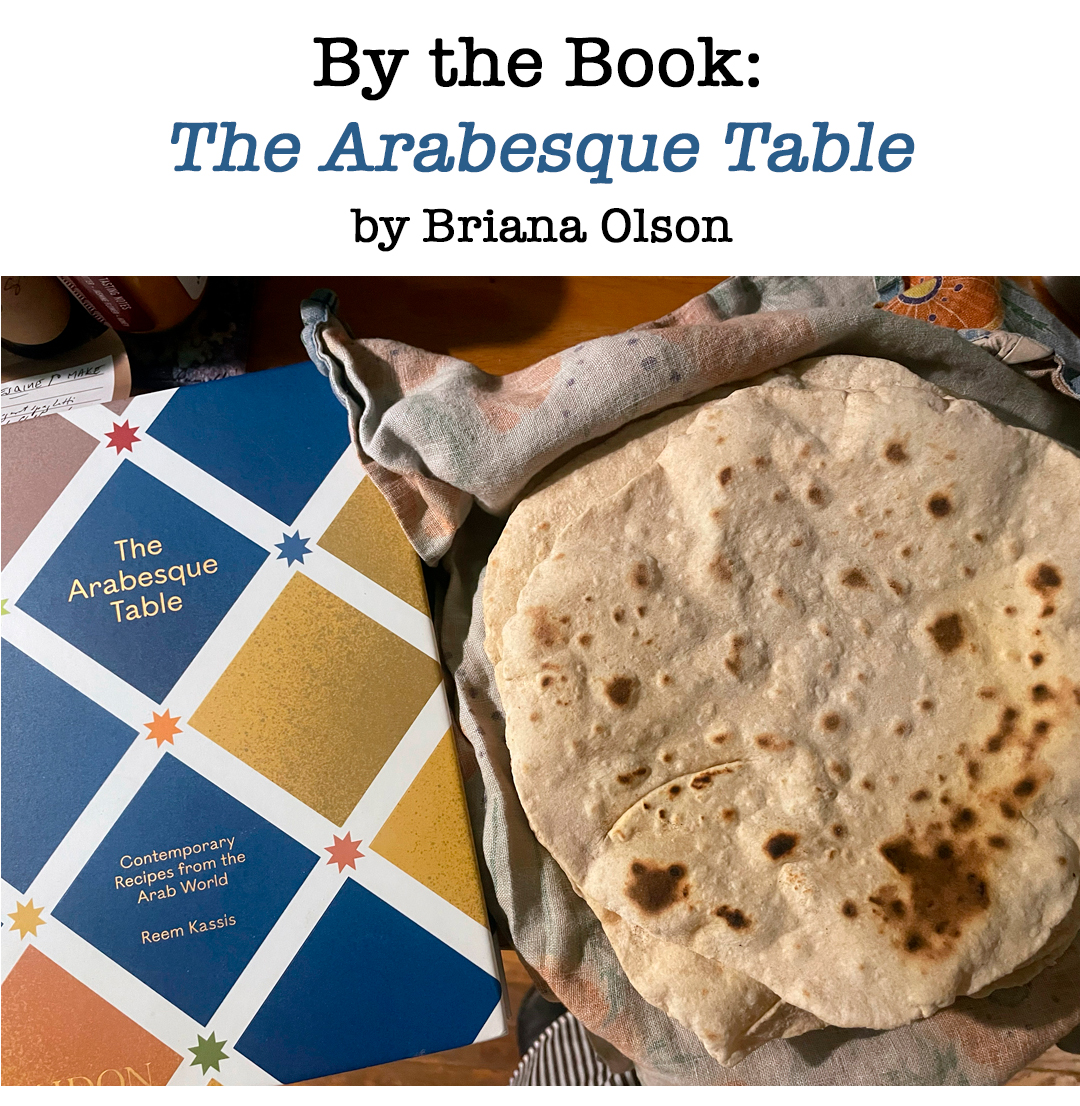
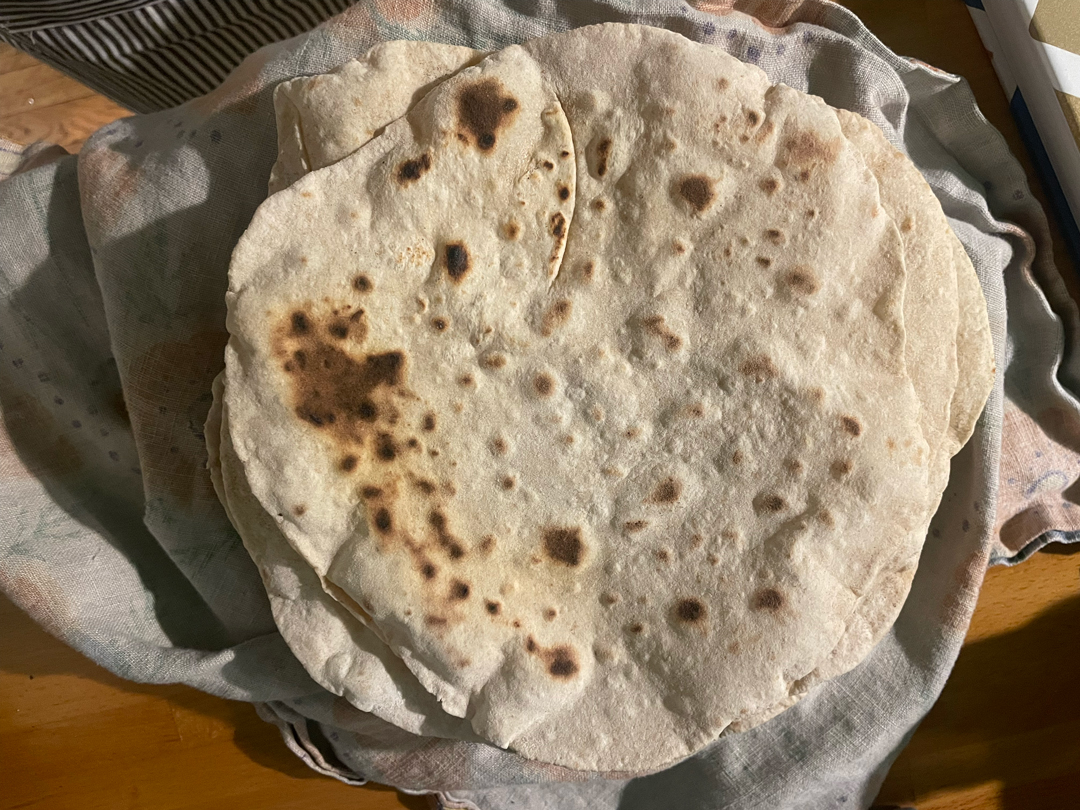
Za’atar schnitzel aside, I’d stop short of flagging these recipes, much less this cookbook, as “fusion.” You won’t find provocative mash-ups of seemingly divergent cuisines; more often, the dishes are updates that draw from a favorite childhood snack or that, like the unleavened flatbread (the first recipe to call to me, and one I’ll make many times again), were born from a rush to pull kids’ lunches together on a busy morning. Many involve the sorts of substitutions native to an international pantry (there’s a falafel made with garbanzos and split peas instead of hard-to-find split favas, and a khubeizeh that uses chard in place of mallow)—and, in that way, they represent an accelerated version of the subtle blending of cuisines that has taken place ever since humans began migrating. And at least one of the more fusion-y sounding dishes—a mutabel made with peanut butter that draws from a classic Sudanese dish—is an illustration of the expansive cultural lens that led her to choose arabesque rather than Middle Eastern for her title.
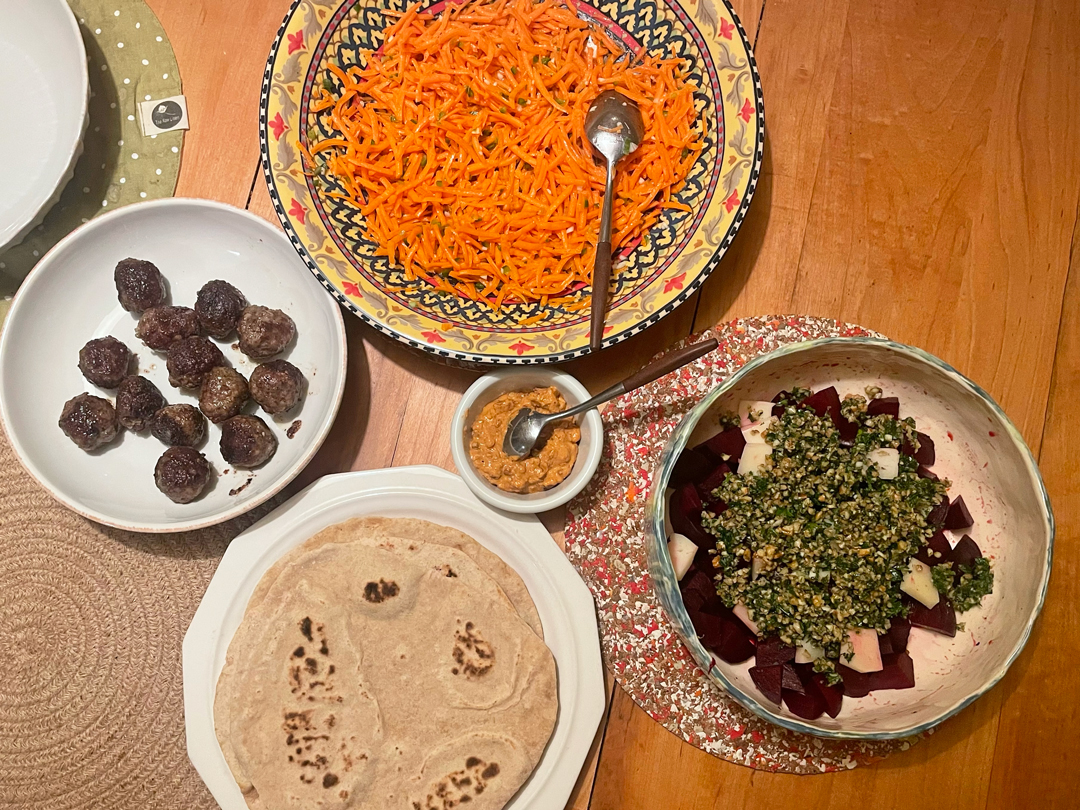
Although the book offers plenty of recipes that include meat, vegetarian and vegan options abound. Nuts and seeds (“the real markers of our cuisine,” Kassis says) get their own chapter, as do grains and pulses, fruits and floral waters, and the triumvirate of coriander, cumin, and cardamom. Although it falls in the “Roots + Shoots + Leaves” chapter, the carrot salad offers an example of why those spices get their own dedicated chapter, and also illustrates another effect of leading with ingredients: Just as you would not likely pull out a four-year-frozen chicken to roast whole, the dusty canister of ground cumin languishing at the back of your pantry is not what you want to reach for when making this aromatic salad.
I was particularly excited to find that The Arabesque Table devotes an entire chapter to tahini, an ingredient I have always enjoyed, rarely cooked with, and which, ever since I picked up a confection that I refer to as a dark chocolate tahini Kit Kat from Chokolá in Taos, I have been spooning onto bites of dark chocolate and threatening to integrate in all manner of desserts. Several of Kassis’s tahini recipes are dessert recipes (there’s even a tahini truffle), but there are also savory dishes and sauces, including a tahini, walnut, and Aleppo pepper spread that might be my new favorite for savory breakfast toast and fresh vegetable sandwiches.
This is both an ambitious book and a simple one. Just as the role of nuts and seeds goes far beyond baklava, The Arabesque Table reaches beyond its recipes. The book’s bibliography speaks as much to the breadth of the Arab world as to that of the author’s research. A recipe for mushroom shawarma traces its origins to Turkey; a one-pot chicken dish was borrowed from a 1960s Jordanian emigré to the United States. “I felt like I was trying to combine centuries’ worth of some of the world’s richest history into a 250-page book. It was no easy feat,” writes Kassis in her acknowledgments. Yet for all the research, the history here is remarkably concise. In the end, this is not a history book, but a cookbook. It’s not a political book, but it is a human one.
Who’s Your Source
Your source for pine nuts is no small matter; Kassis is partial to those from the Mediterranean stone pine, but a New Mexican can only recommend local piñon. Depending on availability, they can be found at the Fruit Basket ABQ, Mago’s Farm, on the side of the road, at New Mexico Piñon Nut Company, and on Craigslist, Etsy, or Ebay.
Mainstream Mediterranean / Middle Eastern staples like tahini, olive oil, and lentils can be found at any good grocery store, but for things like orange blossom water, halloumi, and nigella seeds, you’ll likely want to visit a specialty store. Casa Blanca Market in Albuquerque is a good bet for just about any specialty ingredient called for in The Arabesque Table, including walnuts and shelled pistachios, and they also boast one of the best dried fruit selections around (with bulk options for dates and date paste, should you be making a large batch of ma’amouls). Casa Blanca also carries meat (with an emphasis on lamb) and a few fresh items such as mint.
For whole or ground spices, Casa Blanca is also an option, along with Bombay Spice or, in Santa Fe, Savory Spice Shop. If buying online, seek out spice vendors known for their efforts to source sustainably, like Diaspora, Burlap & Barrel, or La Boîte (one of the only places I’ve seen straight-up za’atar leaves).

Briana Olson
Briana Olson is a writer and the editor of edible New Mexico and The Bite. She lives in Albuquerque.