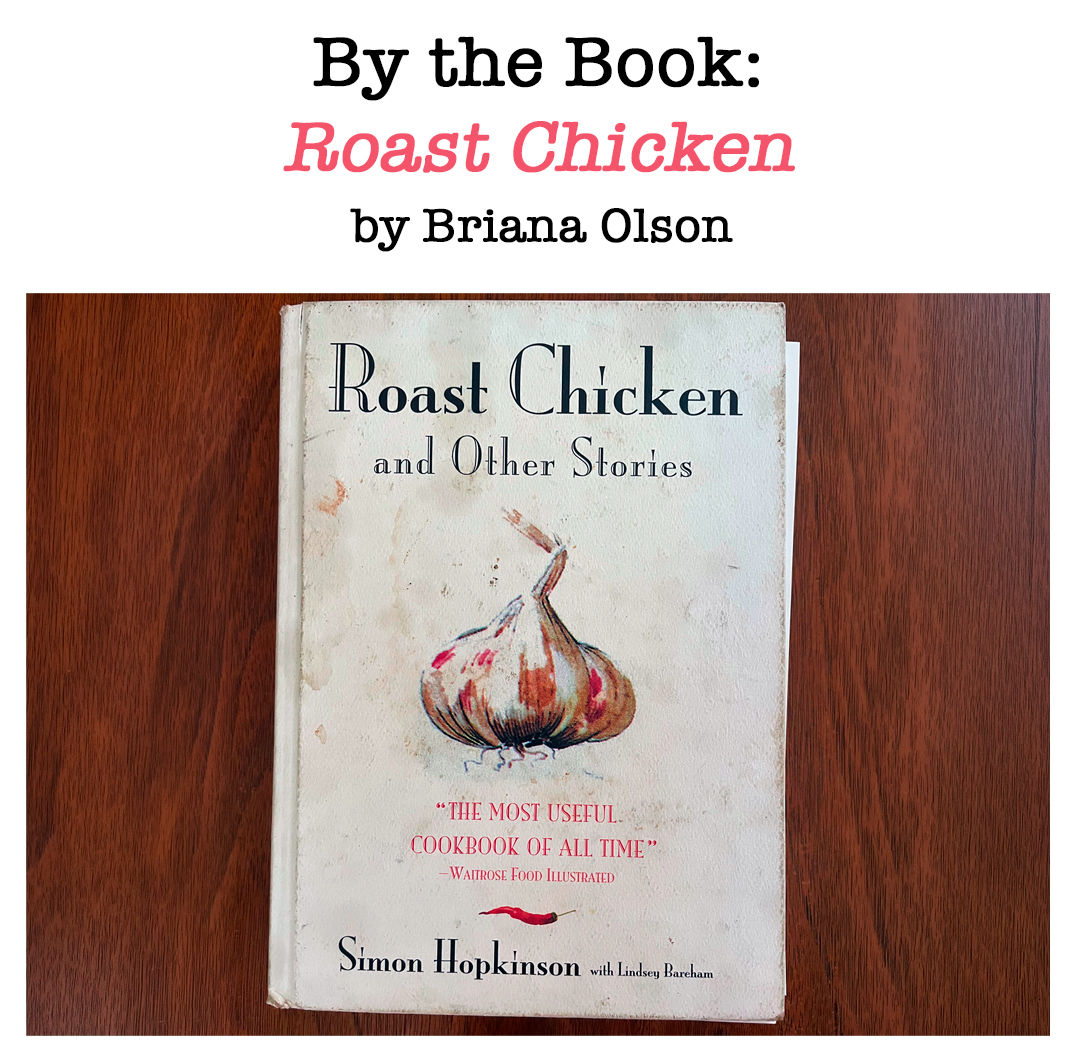
Roast Chicken and Other Stories
by Simon Hopkinson with Lindsey Bareham
Earlier this summer, I stumbled into a corner of the internet stacked with complaints about cookbook production in our era. Who are all these cookbooks being published for, one person asked; why this never-ending churn, why this endless onslaught? Who needs this or that celebrity chef’s third cookbook? And where is all the cookbook criticism?
I didn’t agree with every word of every essay and rant on the topic; I’ve used both good and bad cookbooks by celebrities, including one by former model Carla Hall that I frankly expected never to use, only to find in its pages a recipe for a brilliant raw summer squash and basil salad that alone justifies the book’s place on my crowded shelves. But the arguments resonated. Not in the sense that I felt called to issue a takedown of this or that chef-authored cookbook for its reliance on precious and bizarre ingredients that will never have a place in my utility closet–turned–pantry, but in that I found myself lamenting our internet-fueled, nearly collective obsession with the faddish, the hip, the pretty, the new. Why are roundups of forthcoming or just-published cookbooks always “the best of” or “the cookbooks we’re most excited about” while old ones are often ranked “most influential” or “so-and-so’s favorites”? And why doesn’t Simon Hopkinson’s first book turn up on more of them?
Roast Chicken and Other Stories was first published in 1994; my copy features a blurb from Santa Fe cookbook author (and, for a time, fairly prolific blurb writer) Deborah Madison on the back cover. It’s not entirely true to say that it’s appeared on no “best of” lists, as readers of Waitrose Food magazine voted it “the most useful cookbook of all time” in 2005. That, if you’re counting, was twenty-one years ago.
Whether or not you’ve heard of Waitrose, I think it’s safe to say that Simon Hopkinson is not a household name in the United States. He pivoted from cheffing to writing right around the time this, his first book, was published, roughly twenty-two years before the invention of the iPhone and thirty years before the internet crashed while fretting over the potential demise of TikTok.
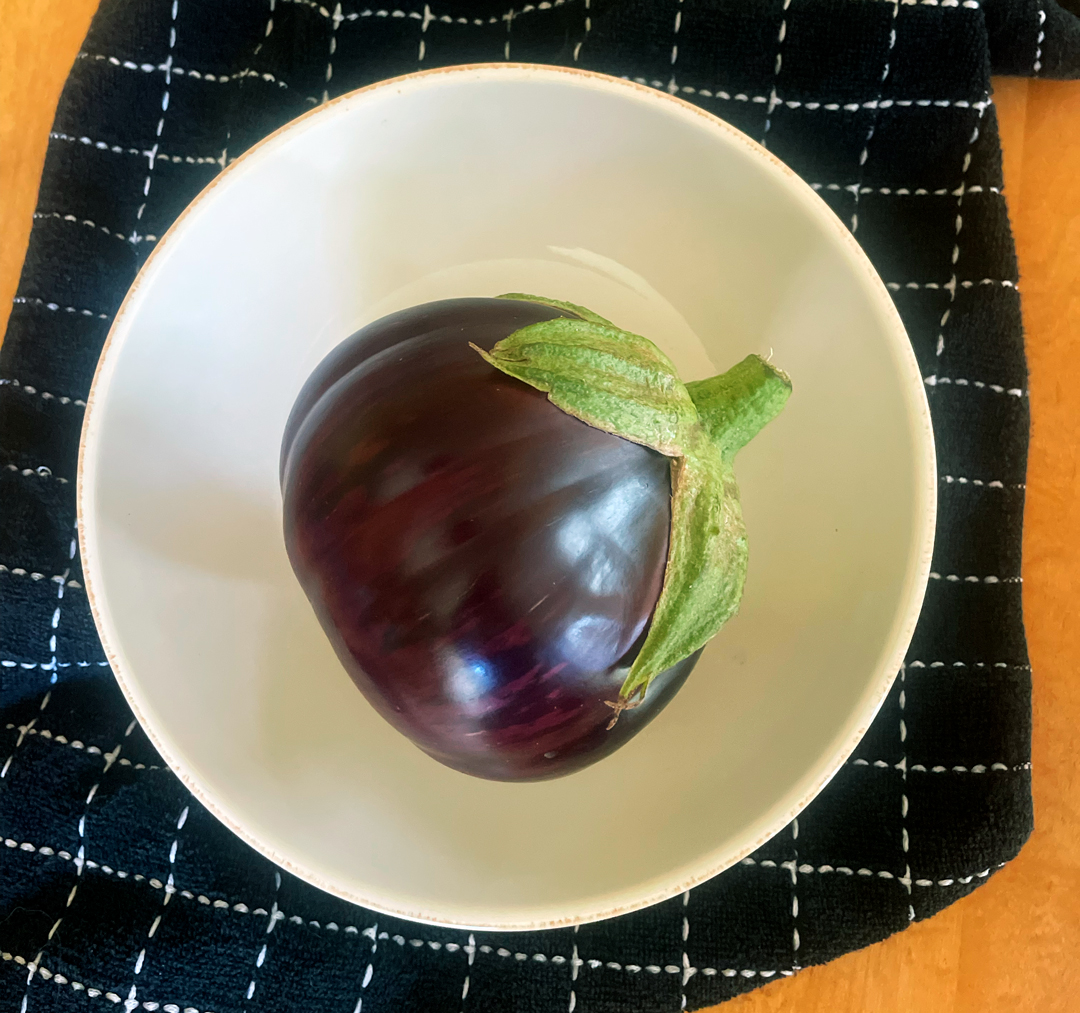
But my reason for loving this cookbook isn’t that it predates the tools that have been used to make so much digital food culture so gooey and toxic; it’s because I can open it to the start of a chapter called “Eggplant,” headed with a small illustration of an eggplant flying through a bluish cloudy sky, and read, “The eggplant is probably my favorite vegetable. I have an Australian friend who is as interested in them as I am.” An unabashed, unqualified expression of taste—there is charm just in that. Amid all the cacophony and spectacle, a dash of understated humor is welcome too. And after all, if you’re going to read a chapterful of eggplant, you may as well choose one by someone who always finds himself thinking of interesting things to do with eggplants.
Each chapter centers on an ingredient; each begins with a story. But a story, for Hopkinson, is also a casual inventory of cooking styles, a collection of tips, a discussion of the qualities of an ingredient. Almost always, that introduction provides enough information to cook with. I’ve never followed Hopkinson’s recipes for Scallops Bercy or Scallop and Artichoke Soup, but his favorite way of cooking them (pan-fried in olive oil and topped with sizzled garlic and parsley), outlined in the “Scallops” intro, became my favorite—and most successful—way of cooking them too.
Hopkinson guided me the first time I roasted a leg of lamb (stuffed with loads of garlic and slathered with anchovy butter), and his praise for the underappreciated breast of lamb was what led me to buy it when I found that that was the cut I could afford at a California farmers market. He has inspired me to braise endive and deep-fry garlic. From him, I first learned the trick of parboiling potatoes before you roast them. Also, I know that as lovely as fancy olive oil can be, good olive oil is just fine, and that it’s hard to use too much of it.
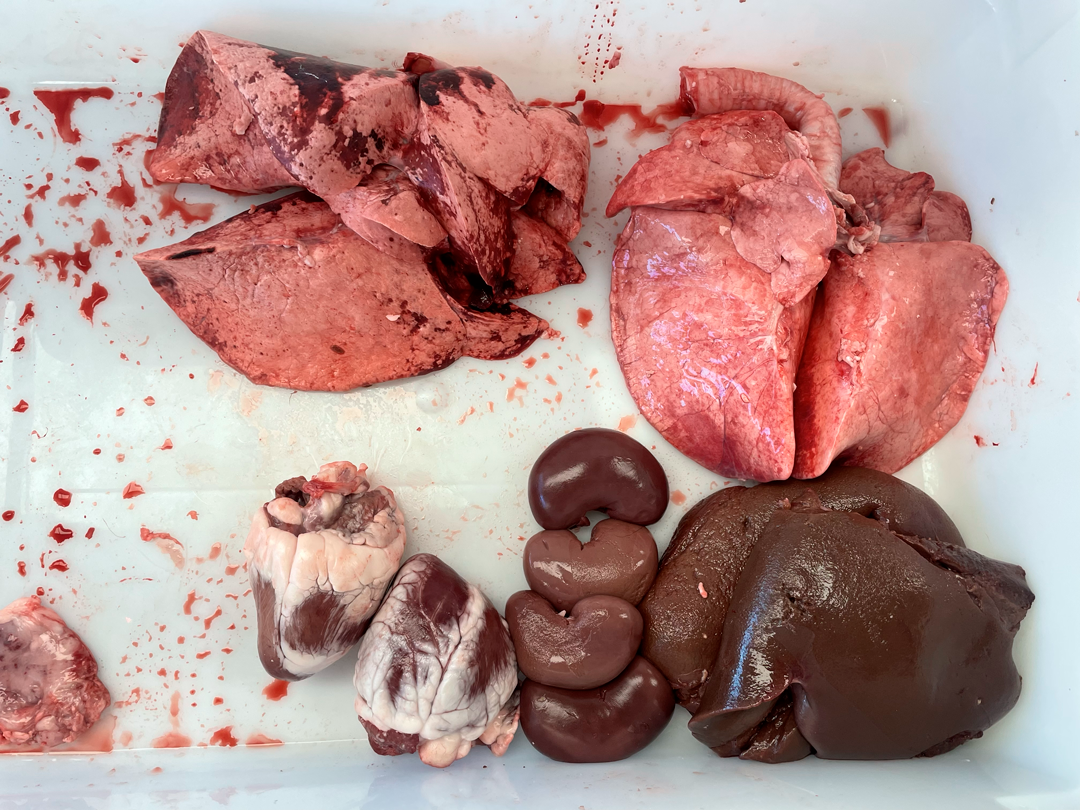
Some of the more decidedly British chapters I’ve perused with curiosity but never cooked from: “Grouse,” “Smoked Haddock,” and, yes, “Kidneys.” So when, at the tail end of a late spring butchery workshop, I found myself agreeing to take home parts of a lamb more traditional to a British upbringing than a New Mexican one, things I’ve eaten occasionally if at all and that I have no idea how to cook, I thought of Hopkinson’s book. I don’t know yet whether kidneys are a food I like to eat, or whether I can cook them, but if there’s any advice on the matter worth following, it’s that of someone who declares their fondness for each and every kind of kidney—and liver, tripe, and sweetbreads too—prepared in all sorts of ways.
I value a recipe that works when followed to the letter (and, at least in my experience, Hopkinson’s do). But the reason, I suspect, for those readers voting his first cookbook “most useful” is not solely for the precision of the book’s recipe testing. (Certainly it’s not for the detailed photographs, of which there are none.) Throughout these chapters, he models the handful of informal precepts laid out in the book’s preface, starting with “Good cooking, in the final analysis, depends on two things: common sense and good taste. It is also something that you naturally have to want to do well in the first place, as with any craft.”
There are cookbooks that promise to turn non-cooks into cooks, slow cooks into fast cooks, fatty cooks into lean cooks. There are cookbooks that promise to instill in you the three things that will make you a better cook, or a decent cook, or a confident cook. Roast Chicken makes no such promises—although the author does note that confidence comes not only from “knowing when to stop and where to start” but from cooking food for others that you enjoy eating yourself. Cook not to impress, he entreats, but to please. It’s a tip that more than a few attention-hungry chefs and cookbook authors of 2026 could take to heart.
Who’s Your Source
“Good food relies on good ingredients, but it has always been my belief that a good cook can turn the proverbial sow’s ear into a silk purse,” Hopkinson declares near the end of his introduction to this book. In other words, he may decry the flavor lost when asparagus is shipped across the seven seas, but he also won’t judge you for buying the asparagus you can afford. Still, his shopping guide (there is no pantry section, nor glossary) is effectively this: Buy what looks good, then build your menu around it.
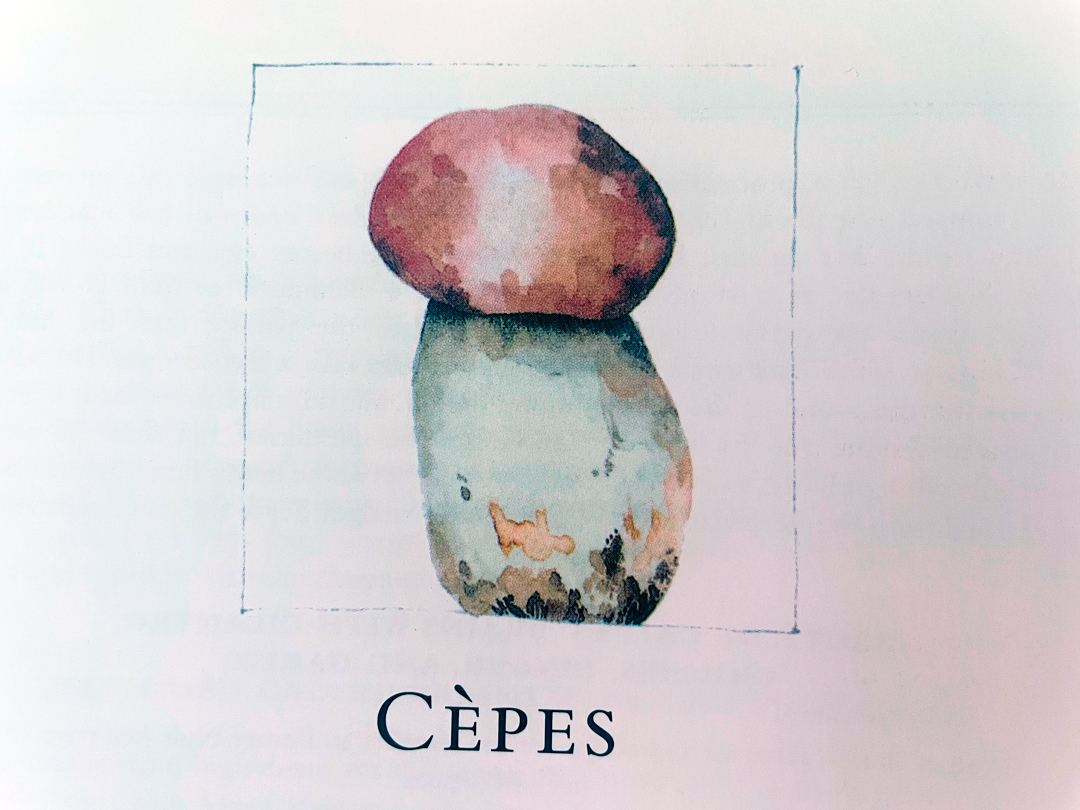
If you can, source vegetables for the dishes in this book from your garden, your neighbor’s garden, or your local farmers market. The food co-op or farm store that stocks locally grown, seasonal produce is another good bet. For porcini, you may have to befriend a forager or become one yourself.
For much of the meat used here, you will need to visit a butcher—and if you’re seeking rabbit or offal, calling ahead is probably wise. A couple of years ago, when I went on a quest for New Mexico–raised chicken, I found just a handful of farms reliably raising fowl. Sile Pastures sells their meat at the Corrales and Santa Fe farmers markets, and Lotus Farms chickens can be found at the Santa Fe market or Polk’s Folly Butcher Shop and Farm Stand (and on the menu at Farm & Table in Albuquerque). Chicken can only be raised during spring and summer here, so you’ll find it for sale between June or July and October or so.

Briana Olson
Briana Olson is a writer and the editor of edible New Mexico and The Bite. She lives in Albuquerque.