I was planning to write about a different, newer cookbook this week, but then my little sister held up a well-used copy of Smoke & Pickles. It was a book I’d given my brother. The two of us were standing, cast adrift, in what was once his dining room. Just a week earlier, and much too soon, he’d departed this world, the one where we could collaborate on a mountain picnic feast or sit down together and nerd out on cooking tools while passing platters of homemade food up and down the table.
Chef Edward Lee would, I think, forgive me for sprinkling grief into a review of his first and most cookbook-y of books. After all, the book itself is, in a sense, the tale of recovering joy from loss. Lee opens his preface with reflection on his grandmother’s loss not of a person but of her homeland. He describes her as so certain of her Koreanness that, while she would stock the ingredients in their Brooklyn pantry, she would not assemble a PB&J. An American through and through, Lee did not share such certainty. Although the first restaurant he opened was a Korean barbecue joint in New York, it wasn’t until he migrated to Louisville, Kentucky, that he found the culinary voice that gave shape to this collection of recipes.
I bought this book for my brother and my partner—I can’t recall who got it first, but I know that, in my household, I’m the one responsible for the fact that the cover has detached from the spine. And I know that my brother was the first one to dive into the section called “Pickles & Matrimony.” The molasses-pickled garlic he gave me over the holidays that year, in theory, weren’t ready yet, but I couldn’t stop picking the cloves out of the jar, and once they were gone, I found the remaining pickling liquid to be a dreamy middle ground of a sauce, somewhere between soy and oyster and syrup. And the bourbon-pickled jalapeños were so divine that I’ve made at least one batch every summer since.
I often rely on classic cookbooks, the bible sort of book that offers, if not purity, clear, detailed instruction on, for instance, how to break down a chicken or how to make mapo tofu. Ed Lee’s book is not that sort. That’s not to say it skips the basics; he outlines methods from curing to kimchi, and his corn bread recipe might be the only one I’ll ever need. There’s plenty of technique to be found here, just not a lot of pomp or fuss in its presentation. How to braise poultry, for instance, is hidden in a recipe for miso-smothered chicken, and the path to foolproof tempura is tucked into a recipe for fried okra. But the chapter titles—“Birds & Bluegrass,” “Buttermilk & Karaoke”—hint at the harmonizing that makes his recipes special.
Yes, there’s a recipe for kimchi poutine, but there’s also lamb prosciutto, oxtail stew, and grits. There are recipes you might make to the letter for a special occasion—I found the one for cola ham hocks to be a revelation—and recipes that might only serve as inspiration. Take his Southern fried rice, which calls for black-eyed peas and eggs scrambled with ham broth; early this week, I made a version with what I had, which included leftover Easter ham and green cabbage.
Lee declares that smoke is the sixth flavor—an assertion I can picture my brother nodding at in gleeful approval—but also that not all smoke comes from fire. Sorghum, bourbon, lardo, and the kiss of cast iron are some of the means through which his recipes make smokiness accessible to those of us without the space, time, or inclination to spend all weekend tending to the smoker. Maybe it’s just my current frame of mind, but I can’t help but reflect that smoke can also impart the scent of time—a visceral marker of our ephemerality and the transformations undertaken over the course of our lives.
Since publishing Smoke & Pickles, Lee has published two other books, including the James Beard Award–winning Buttermilk Graffiti. But his first one (which came out in Korean late in 2024) will always have a place in my kitchen and in my heart. Cooking from it, I understand that carrying memories through food doesn’t necessarily come from adherence to tradition. Lee writes, “The hardest things to hold onto in life are the ones that want to disappear.” And isn’t tradition itself about grasping what is most tenuous, trying to weave threads between one life and the next?
Who’s Your Source?
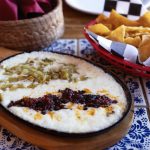
“The first step to creating the best taco is finding the right tortilla,” wrote John Katrinak, Albuquerque chef and owner of Soo Bak Seoul Food, in a story on his own journey in finding harmonies between ingredients as geographically distant as sweet Korean barbecue sauce and Mexican crema la chona. And while Smoke & Pickles includes no taco recipes, Lee would most certainly agree.
Some of the Louisville chef’s preferred Southern ingredients, like country hams and Carolina rice, may require mail order, but luckily there are a number of Korean markets in Albuquerque, as well as the international Talin Market and, in Santa Fe, the Santa Fe Asian Market. Any of these, and maybe even your mainstream grocery store, should carry Red Boat Fish Sauce and a variety of misos.
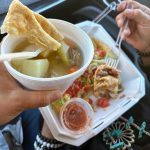
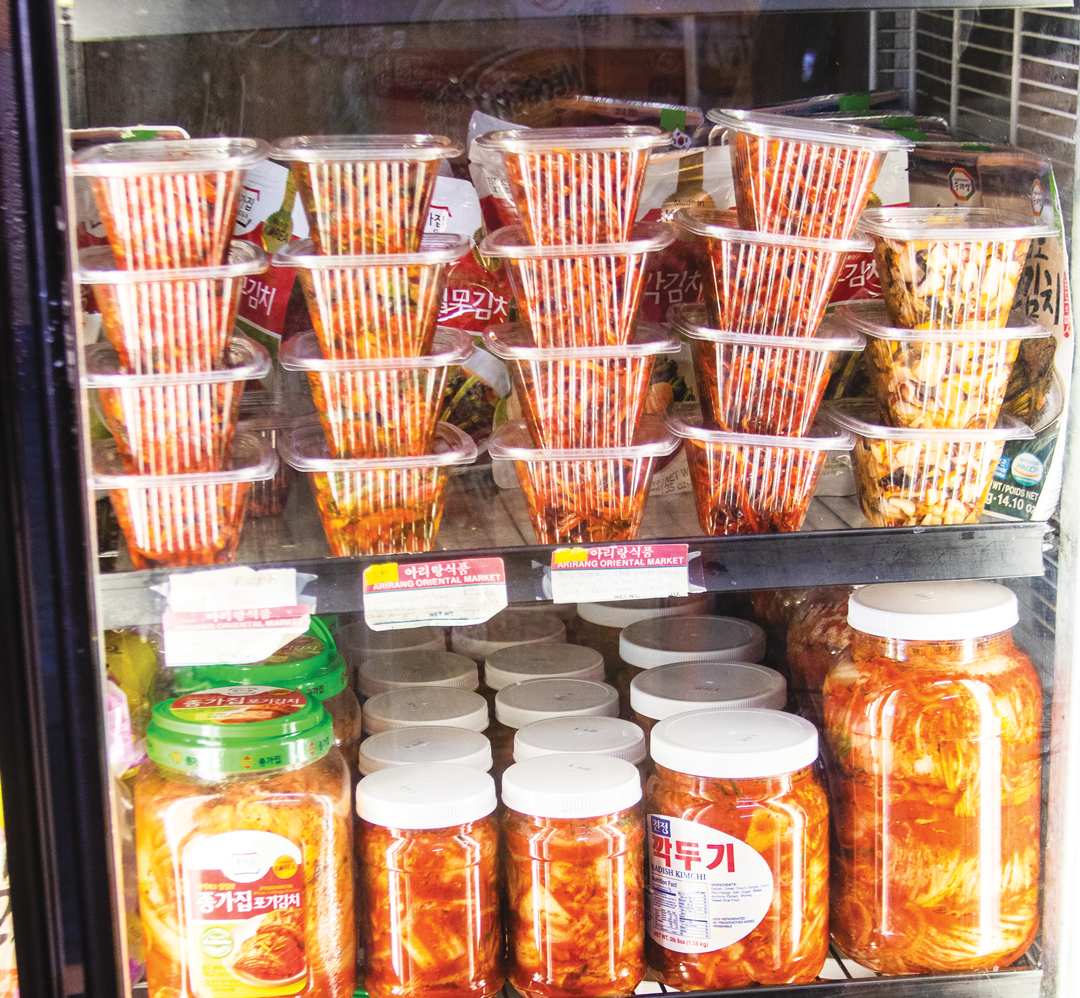
A-Ri-Rang Oriental Market is a good place to pick up an oversize tub of gochujang paste, a pint of crunchy house-made cucumber kimchi, or a head of napa cabbage and everything else you need to make your own (unless, that is, you’re trying one of Lee’s unconventional approaches, in which case you might need to hit your usual supermarket to pick up some apples as well). I’m also partial to the tiny dining room in the back of the shop, which the aforementioned local chef John Katrinak covered in a story for our sister mag (although, given the pandemic situation at the time, he ordered takeout).
A-1 Oriental Market has shelves stocked with a wide selection of essentials for Korean cooking like soy sauce, sesame oil, rice vinegar, and, of course, rice and noodles. Andrea Walker covered the shop and its sister restaurant for us a couple of years back in “Bounty of the Nood.”
Lee is also an advocate for local sourcing, particularly of meats—something that’s getting easier and easier to do in New Mexico. In Albuquerque, tiny grocer ABQ and Farm to You by Bomvida Farms carry local beef (and sometimes lamb); C4 Farms has started doing Friday pickups at Moses Kountry Health Food Store in the North Valley, and starting May 2, Santa Feans can pick up their pasture-fed beef at C4’s partner biz, Oakley’s Jerky Company. Santa Fe is also home to Beck & Bulow, and on the Turquoise Trail, both Village Greengrocer and Polk’s Folly Butcher Shop and Farmstand carry local meats, with the latter selling their own pork alongside a variety of other locally raised meats.
Farmers markets are also a good source for local meats (as well as the fresh herbs and veggies that show up in Lee’s recipes). Sile Pastures, one of few local chicken farmers, sells both in Corrales and Santa Fe.
And, should you be planning a family cookout on a tight budget, consider Nelson’s Meats in Albuquerque’s South Valley rather than a box store.

Briana Olson
Briana Olson is a writer and the editor of edible New Mexico and The Bite. She lives in Albuquerque.