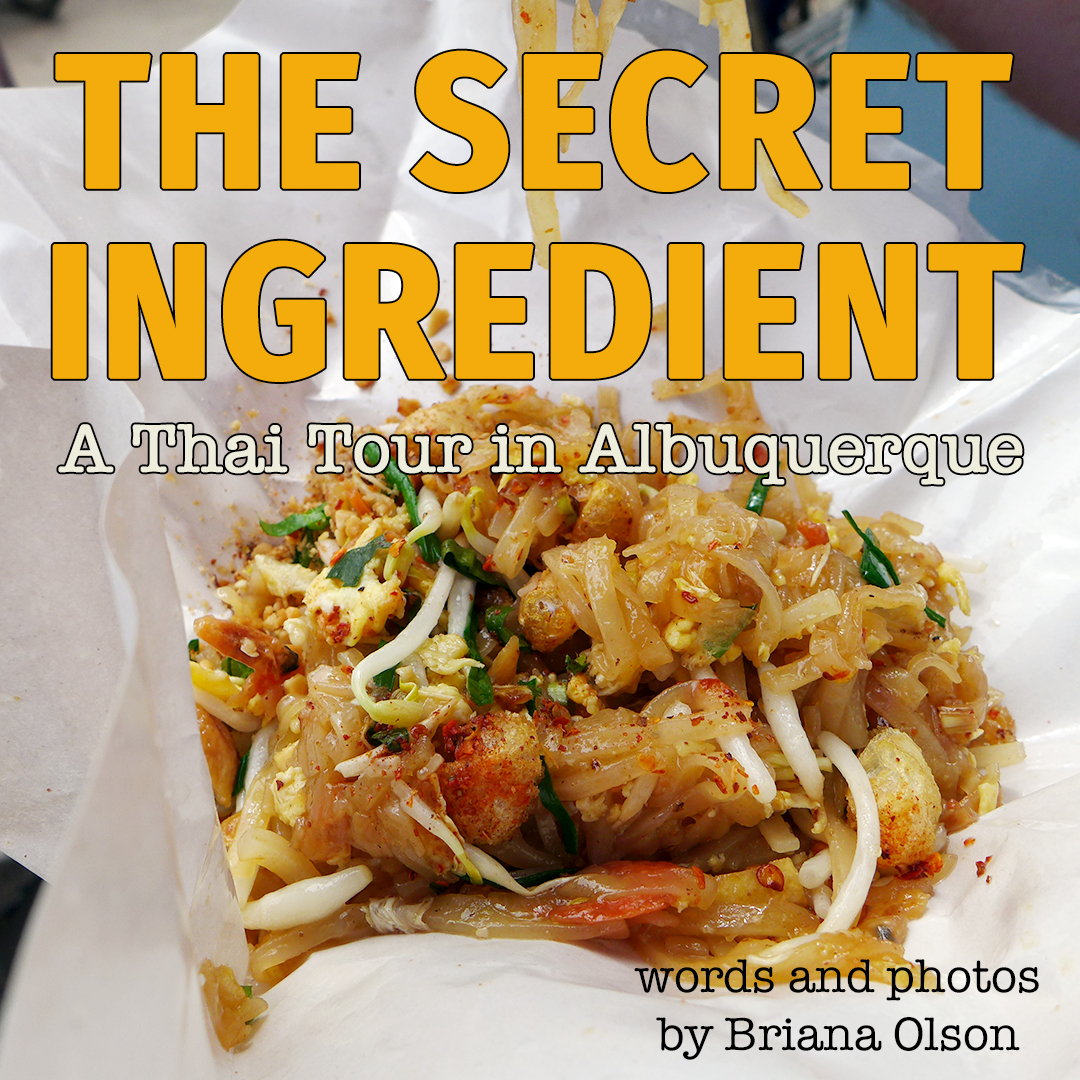
It was widely rumored that the secret ingredient in the pad thai at the most popular Thai restaurant in my college town was none other than ketchup—and the rumor may well have been true. Tangy, sweet ketchup is a well-known substitute for tamarind, long used as a work-around when the quintessential ingredient is unavailable. Whether due to ease of sourcing and prep or to please a more generalized American palate, some kitchens still use it. And whether true of that particular restaurant or not, the rumor nods at a truth that applies just as well to spaghetti: the dish by which most of us know Thai food is American—or, at least, an American-ish interpretation of a dish that was purportedly invented as part of a modernization campaign led by the Thai government in the 1940s. And is it any surprise that of all the dishes in Thailand, the one that would come to be required on Thai restaurant menus in the United States (and even to serve as the litmus test by which those restaurants are judged) would be a dish that was effectively the first step in a decades-long campaign of gastrodiplomacy?
Thailand, as I learned while cycling around it a decade ago, is geographically diverse, with lush mountains flanking its northern borders with Myanmar and Laos, a vast eastern plateau, rice-growing central lowlands, and a long tail extending south into the Malaysian peninsula. Within hours of arriving in Bangkok for the first time, I’d had an experience that tracks with the reports of roughly a zillion other American tourists in Thailand: My palate was cracked open, my taste buds were blown, and I realized that despite years of eating green curry and fresh rolls, I knew almost nothing about Thai food. How had I never had Thai fried chicken or stir-fried water spinach or even the most basic noodle soup? And if there was a dish that just about any roadside vendor was always game to prepare, it wasn’t pad thai but pad kaprao.
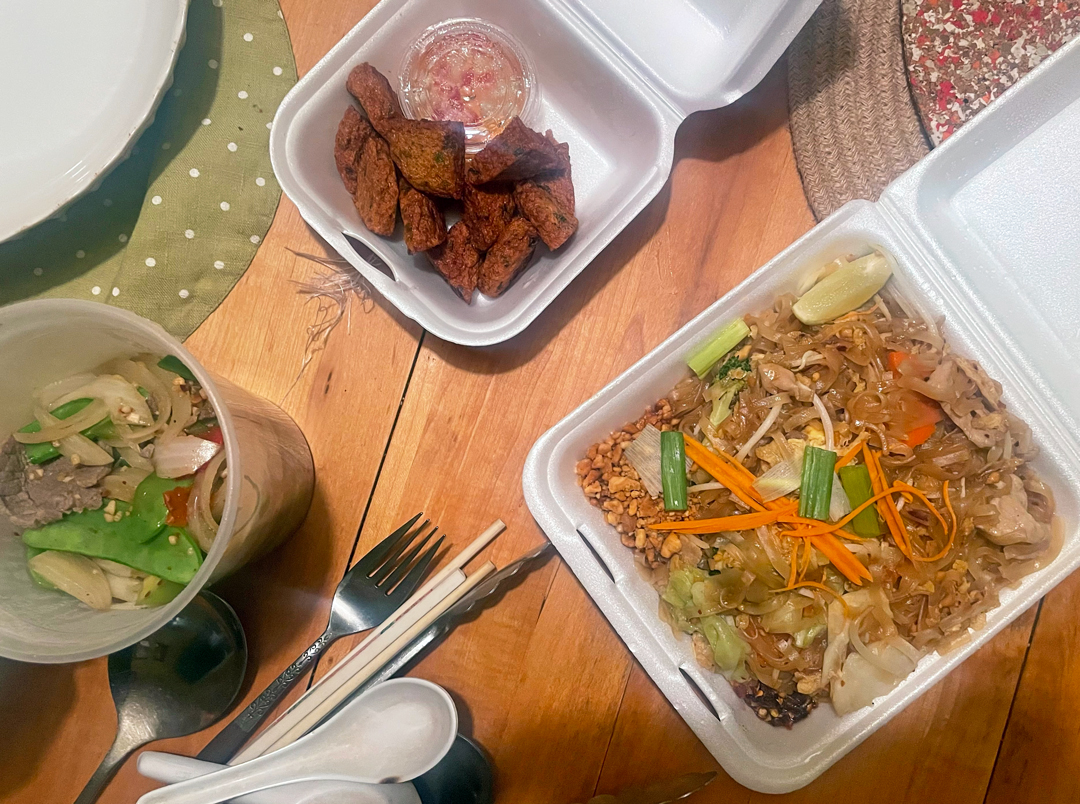
As often happens after traveling to the source, my adventures in Thailand initially turned me off from American Thai food altogether. It wasn’t just that the menus tended to offer a standard selection of dishes—a reality that was likely shaped by a more recent government campaign known as the Global Thai program—but that the verve and vibrancy of the dishes were diminished, that they’d been adapted to cater to eaters who had limited tolerance not only for the heat but for the funk at play in many Southeast Asian dishes. When I stumbled on a place specializing in Isaan dishes or serving northern Thai sausage, I’d go; otherwise, I’d skip it. And after a few lackluster Thai meals, I’d more or less sworn off Thai in New Mexico. Then I discovered Thai II Cuisine in Nob Hill, whose takeout became central to my rotation during the pandemic. I was drawn in by the lemongrass-laden fish cakes, the offering of pad kaprao, the laab. But eventually I soured on the whole takeout phenomenon—and experienced some menu fatigue too. Pan-fried noodle dishes, so spectacular when scooped from a market vendor’s wok to a thick slick of paper and eaten on the spot, don’t fare as well when shut into a Styrofoam box, tied in a plastic bag, and left to sit as long as it takes for the bag to be picked up and driven to its destination.
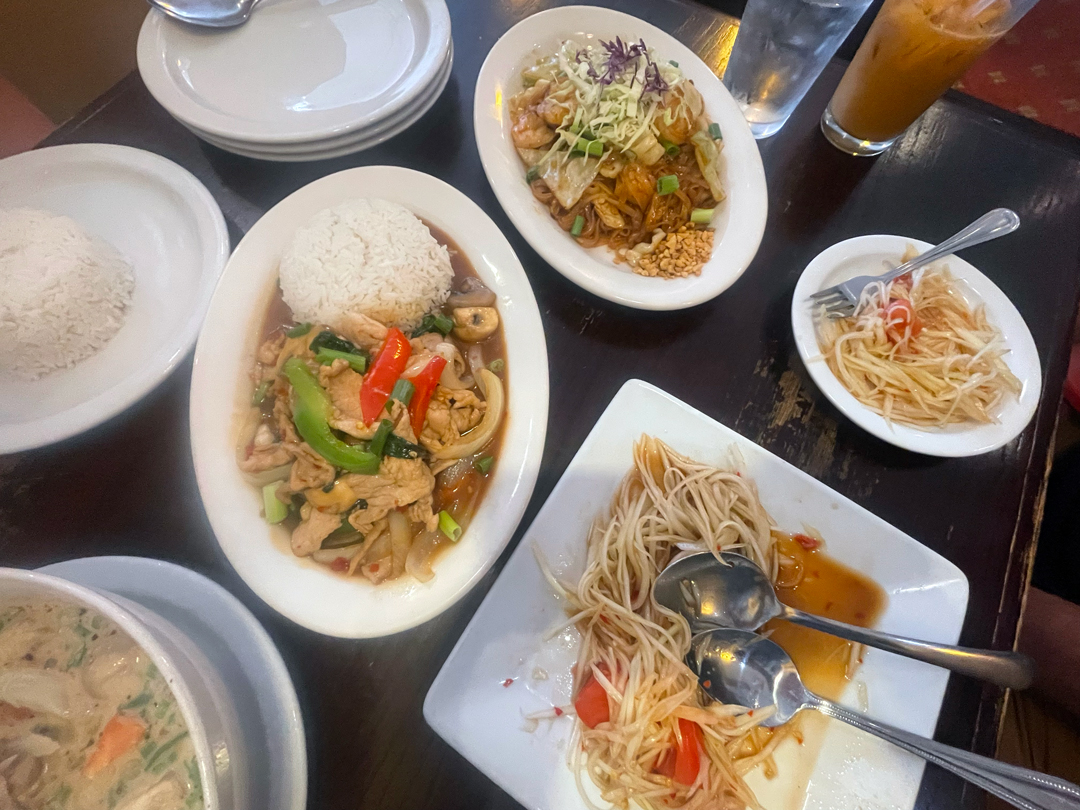
Dining at Leo’s when they opened in Santa Fe (I interviewed their chefs earlier this year for edible New Mexico) reminded me just how much I love Thai food in all its spicy, funky complexity, and the craving for those flavors challenged me to reconsider the Thai scene in Albuquerque. A discerning friend once told me that Thai Kitchen, positioned (yes, in a strip mall) on the edge of Albuquerque and Corrales, served a pad thai closer to what she’d had in Thailand than anywhere else in town. Though casual, the dining room at Thai Kitchen is much more elegant than you might guess upon spying their sign across the parking lot—it’s a far cry from a Thai market stall. Somewhat unusually for a Thai restaurant in the Duke City, they serve wine and beer along with the requisite Thai iced tea, and the wood accents behind the bar, along with attention to lighting and living plants, make for an atmosphere equally conducive to a weekday lunch or a Saturday night. And their pad thai is excellent, the noodles beautifully caramelized, the shrimp cooked just enough, the cabbage crisp, with the unmistakable notes of tamarind, the background umami of fish sauce, and just the slightest hint of sweet.
Opened in 2014 by husband-and-wife team Art and Bond Xaiyasiha, who’d both worked for years at Siam Cafe, the tagline on Thai Kitchen’s Facebook page is “We bring Thailand to you.” In addition to pad thai, pad see ew, and a menu of the curries expected of a Thai restaurant in the US, their menu includes not one but two versions of pad kaprao. This simple dish of stir-fried pork, holy basil, garlic, and chopped green Thai chilis is to Thailand as the breakfast burrito is to New Mexico: Every cook has their version, some with ground pork, some with sliced, some with another meat, or fish; some mild, others packed with enough chilis to set your hair on fire. Thai Kitchen might use Thai basil in their pad kaprao instead of holy basil, which is difficult to find locally, but their rendition is delicious either way, and the chef’s special on their dinner menu includes a version topped with an egg, as it’s often served in Thailand.
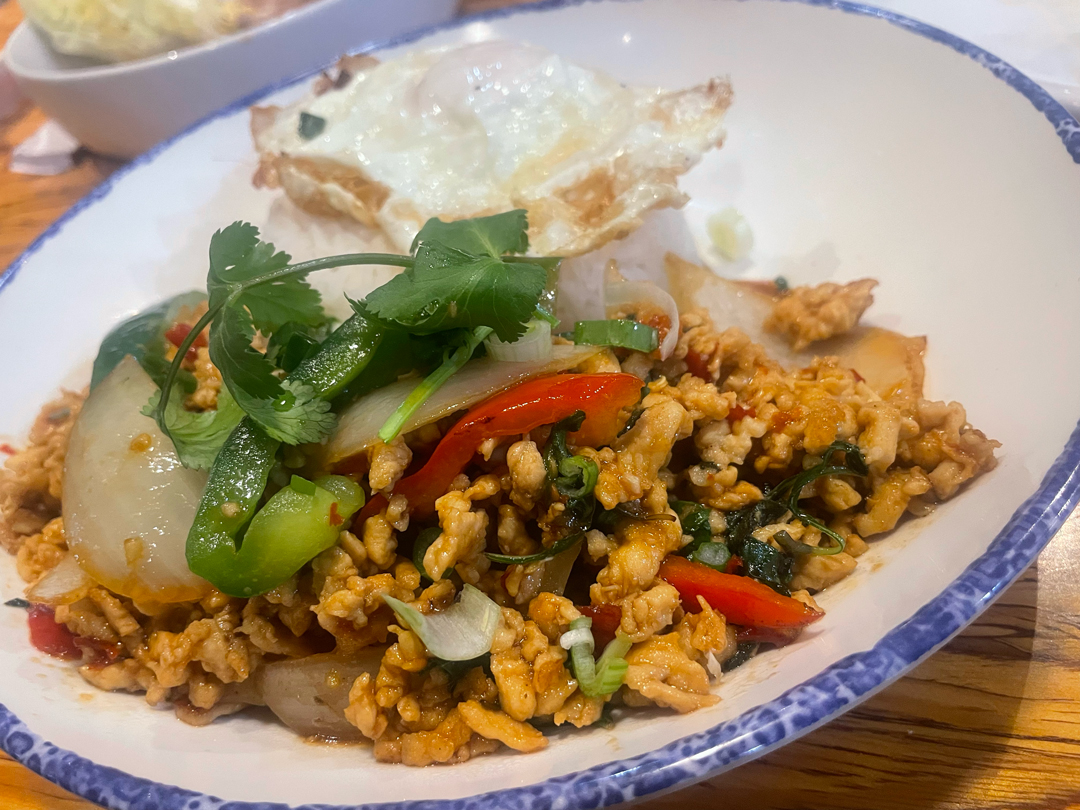
No one who knows Thai Kitchen seems surprised to hear that, as Art puts it, “Thai Kitchen is the lifeline for SA Thai.” A few years ago, wanting to try something different without turning off longtime customers, Art tapped local entrepreneur Claudius Dipo Alam (a co-owner of Paleta Bar among many other ventures) as a partner for SA Thai. Also in a strip mall (but a much more modern one), SA Thai opened just off Paseo del Norte in 2024, and was (I think) the first to bring khao soi to Albuquerque. While the pad thai at most US restaurants, along with a few of the other familiar standards, harks from Bangkok, khao soi is a northwestern Thai dish with Burmese roots: thin egg noodles in a rich red curry, traditionally served with chicken, topped with crispy wheat noodles, and served with assorted condiments, usually including pickled mustard greens. SA Thai also makes a nice pad kaprao, topped with an egg. But my favorite of the dishes I’ve tried there may be the grilled beef nam tok, a.k.a. waterfall salad, with its unabashed notes of galangal.
SA Thai has a fast-casual vibe, with exposed ceilings, a deconstructed tuk-tuk mounted on one wall, and illustrations evoking Bangkok painted on another. At both Thai Kitchen and SA Thai, I’ve experienced attentive, enthusiastic service from iPad-wielding twenty-somethings with varying knowledge of the cuisine—which means both that you’ll be cared for and that you may have to gamble or do your own research if you want to venture beyond your usual order. Next up for me at SA will be the fried pork belly. Unless, that is, Art’s third venture—an Isaan-leaning, quick-serve spot called Thai Sabb, located in the strip mall on Wyoming that was long home to Thai Tip—opens soon enough for me to try their northern Thai–style sausage first.
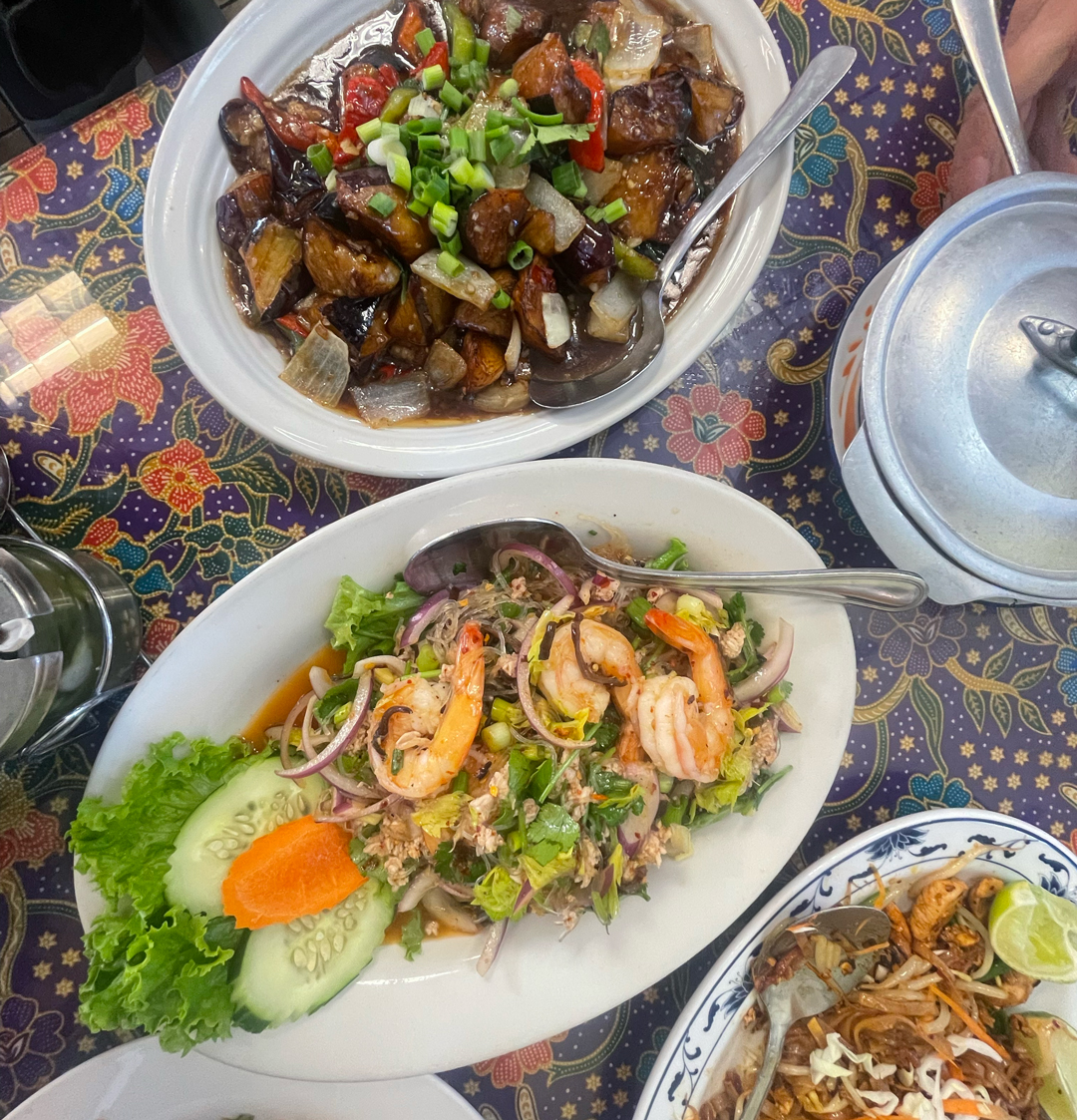
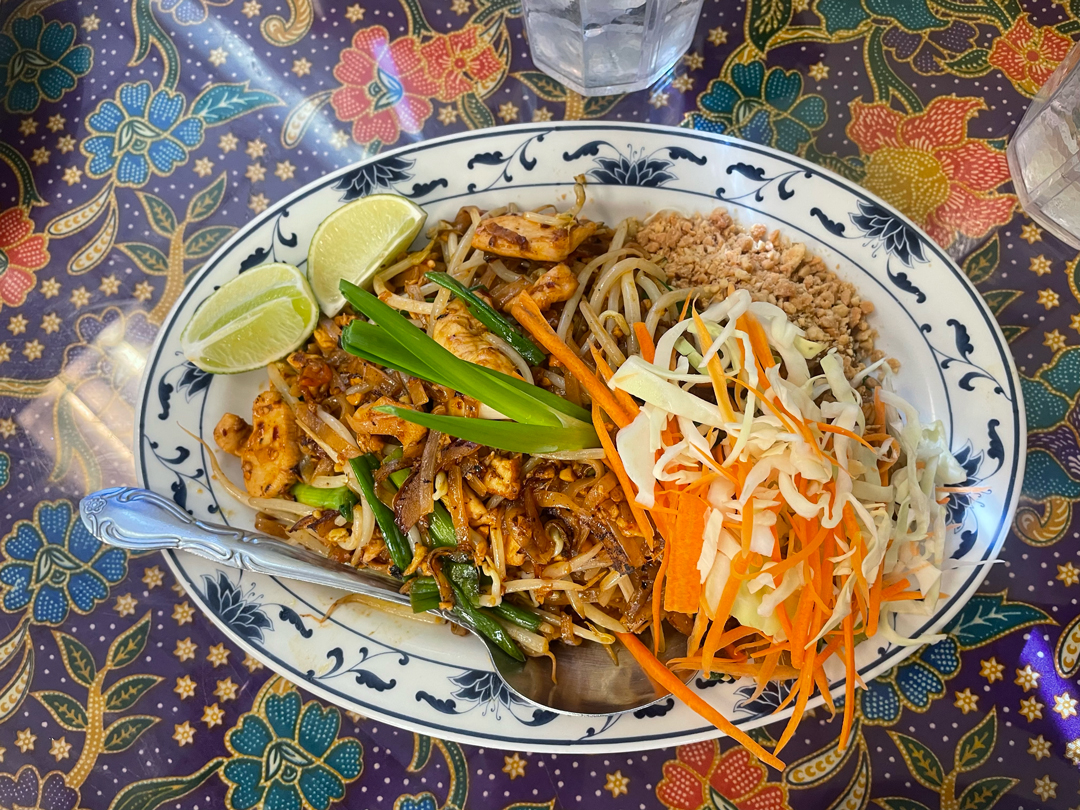
Lately, though, I find myself just wanting to finish eating my way through the menu at Pad Thai Cafe, across the sidewalk from Talin Market. The women who run the place make it feel like a family kitchen. It’s a place where Thai is spoken, softly and beautifully, among staff members and sometimes customers. It’s a tiny place and not a showy one; there are photos of the king (mandatory in Thailand), a few framed landscapes, and glass tabletops over floral prints. To order carryout, you simply call them and tell them what you’d like. But I recommend dining in. The no-frills atmosphere is not so far from what you might find in Thailand, minus the open-air kitchen. Their drunken noodles are deservedly popular, and an especially good choice if you’re seeking gateway Thai. They make a wonderful tom kha, aromatic and light, and the glass noodle salad and papaya salad are both made with enough fish sauce to be funky—as it should be. Their pad thai is fantastic, too. Of the Thai spots I’ve visited in Albuquerque, Pad Thai Cafe is truest to their homeland when it comes to heat, so if you order Thai hot, be prepared for a seriously spicy dish. And if you’re not sure how hot you can take it, they’ll offer to bring the chili tray to the table so you can make your own adjustments.
The cuisine of Bangkok alone could be a life’s study, and I hardly consider myself an expert. But I appreciate those restaurants willing to challenge and educate American palates. By the way: Except for noodle soups, Thai food is not traditionally eaten with chopsticks. Instead, the going formula is to use a spoon in your dominant hand and a fork in the other; if this confuses you, Pailin Chongchitnant of Hot Thai Kitchen shares the lowdown here. (Let’s take a moment to honor the passing of our arrogant younger selves, rudely demanding chopsticks for their massaman curry as though it were a server’s oversight.) And even if the pad thai of my college years was made with ketchup instead of tamarind (and probably lacking a few other classic ingredients besides), it still hooked me—and maybe it was the start of my palate growing up. As annoying as arguments about authenticity in cuisine may be (who gets to decide what’s authentic, and how far back do we have to go? Is pad thai inauthentic because its origins are Chinese?), I do think they’ve helped broaden mainstream American culinary horizons—and helped American renditions of international foods evolve. And isn’t the secret ingredient to any good meal how much we enjoy eating it?

Briana Olson
Briana Olson is a writer and the editor of edible New Mexico and The Bite. She lives in Albuquerque.