On Indigenous Foodways
In New Mexico, we’re more attuned than most to the influence of Indigenous foods, not just on the menu at the local diner but on global cuisines. We know chocolate doesn’t grow in Switzerland, potatoes don’t come from Ireland, and beans are gold—but it’s still hard, sometimes, to remember that as wonderful as spaghetti puttanesca or amatriciana may be, tomatoes aren’t native to Italy, and Mesoamerican salsas came first. And as Lois Ellen Frank writes by way of introducing her second cookbook, Seed to Plate, Soil to Sky, “Many people are unaware of the contribution Native people of the Americas have made to the foods they eat every day. In preparing these foods, we can revitalize everything associated with them.”
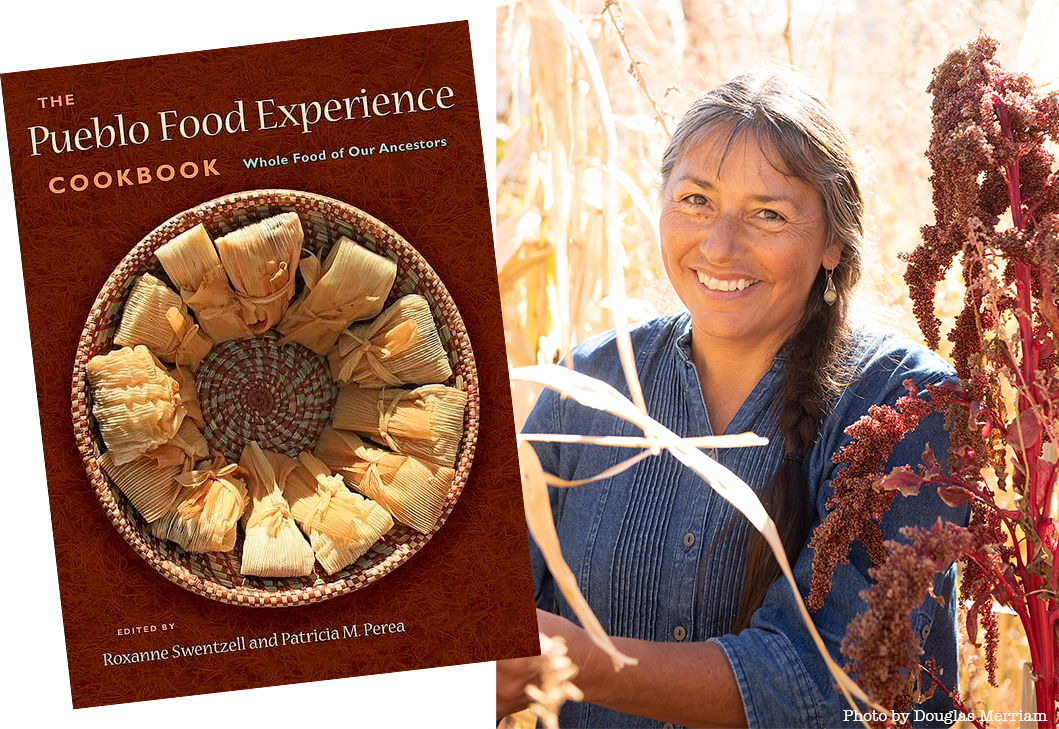
The Pueblo Food Experience Cookbook: Whole Food of Our Ancestors
Coedited by Roxanne Swentzell and Patricia M. Perea
“If our economy dried up tomorrow, if the stores closed, what could you make to eat with the resources you have now?” asks Roxanne Swentzell in the preface to The Pueblo Food Experience Cookbook. Her answer is not pallets of freeze-dried meals and bottled water. Nor is it a Mad Max vision of resurrecting secreted-away seeds—although Swentzell is a seedkeeper, and a teacher, and a person one would be generally blessed to have in their post-apocalyptic pod. Instead, she writes, “This thought has always led me back to my ancestors, who were the true permaculturists of this arid Southwest.”
As you might guess from such an opening, The Pueblo Food Experience Cookbook is both a cookbook and a collection of stories. On the one hand, the stories concern a three-month experiment where a group of people Indigenous to New Mexico ate only their original foods—and the recipes, from a lovely peanut-free trail mix to atole to rabbit stew, stem from this experience. But the stories are also of reconnection to process and place, from visiting the salt flats to honoring a buffalo with gratitude before taking its life for human sustenance. Reading it will make you feel wiser, and maybe a little kinder—and who knows, it might lead you to your own experiments in diet, whether that be a shift away from corporate corn or a journey toward recognition of your own place in what Swentzell calls “the ecosystem of a larger cultural belonging.”
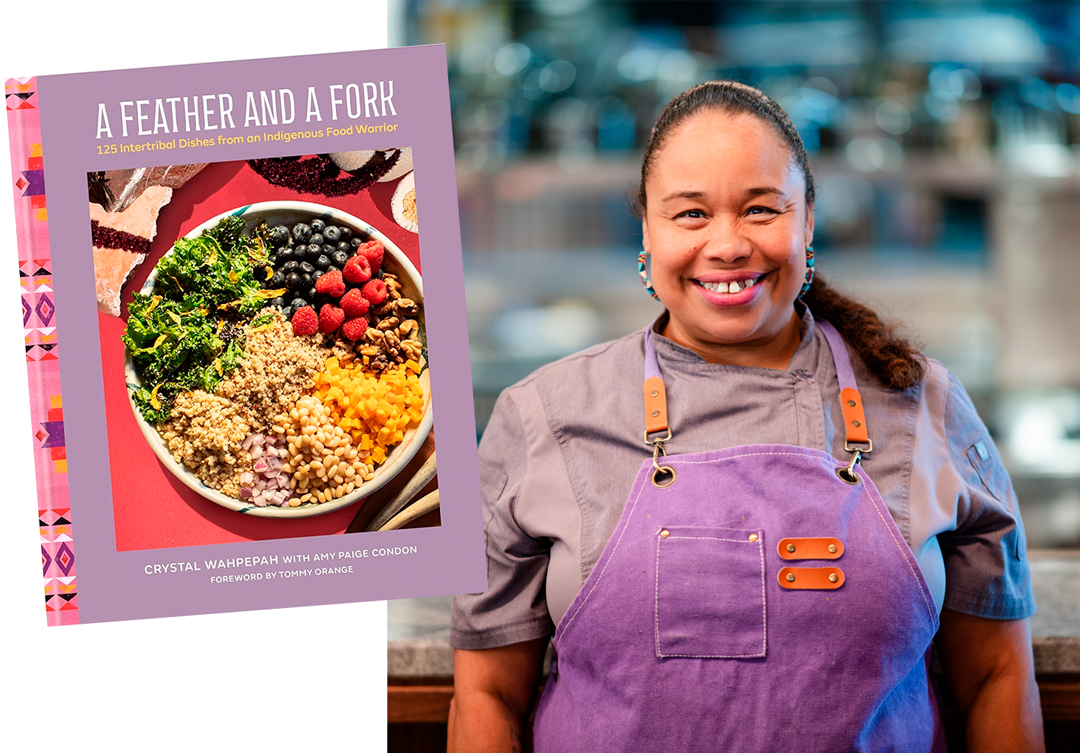
A Feather and a Fork: 125 Intertribal Dishes from an Indigenous Food Warrior
By Crystal Wahpepah
“The food in these recipes is by and large good for you, and also delicious,” writes fellow native of Oakland and National Book Award winner Tommy Orange in his foreword to Chef Crystal Wahpepah’s first cookbook. Wahpepah grew up in Oakland, not far from the Fruitvale transit center (which is not far from her restaurant, Wahpepah’s Kitchen), and A Feather and A Fork is very much a modern Indigenous cookbook. Picking this book up, I wasn’t especially surprised to find myself flagging all kinds of cool new uses of blue corn and amaranth flour, but I was a little surprised at the number of salad dressings that called to me. These recipes showcase ingredients indigenous to the Americas, from squash to venison to maple syrup, fiddleheads to blueberries, but they also include things like culinary sage, Swiss chard, and sweet potatoes. There is a recipe for blue corn mush; there are recipes for pozoles and stews. There are also recipes influenced by the chef’s Oklahoma connections (she is an enrolled member of the Kickapoo Tribe of Oklahoma), like catfish stew, and recipes that reflect the meeting of Indigenous foods and European culinary tradition, such as a bisque-like pumpkin soup and crepes made with acorn flour.
While A Feather and A Fork is threaded with stories, including an introduction where the chef revisits parts of history that tend to be more familiar to Natives than to white people—like the 1950s Indian Relocation Act, when thousands of Native Americans were forced off reservations and into cities—it’s very much grounded in the present and future. For Wahpepah, reclaiming ingredients and relationships with the land isn’t gestural or performative; it’s a means of reclaiming one’s health, and celebrating kinship with beautiful animals and plants that, aside from being indigenous to this continent, have tended to be phased out of our diets because they’re too wild to be megafarmed. The ingredients that lead in these recipes are derived from plants that thrive in biodiversity: the Three Sisters, of course, but also chokecherries, which grow wild (and tamed, or at least semi-tamed) in central New Mexico, as well as rabbit, which strikes me as the most sustainable variety of meat that no one ever seems to eat.
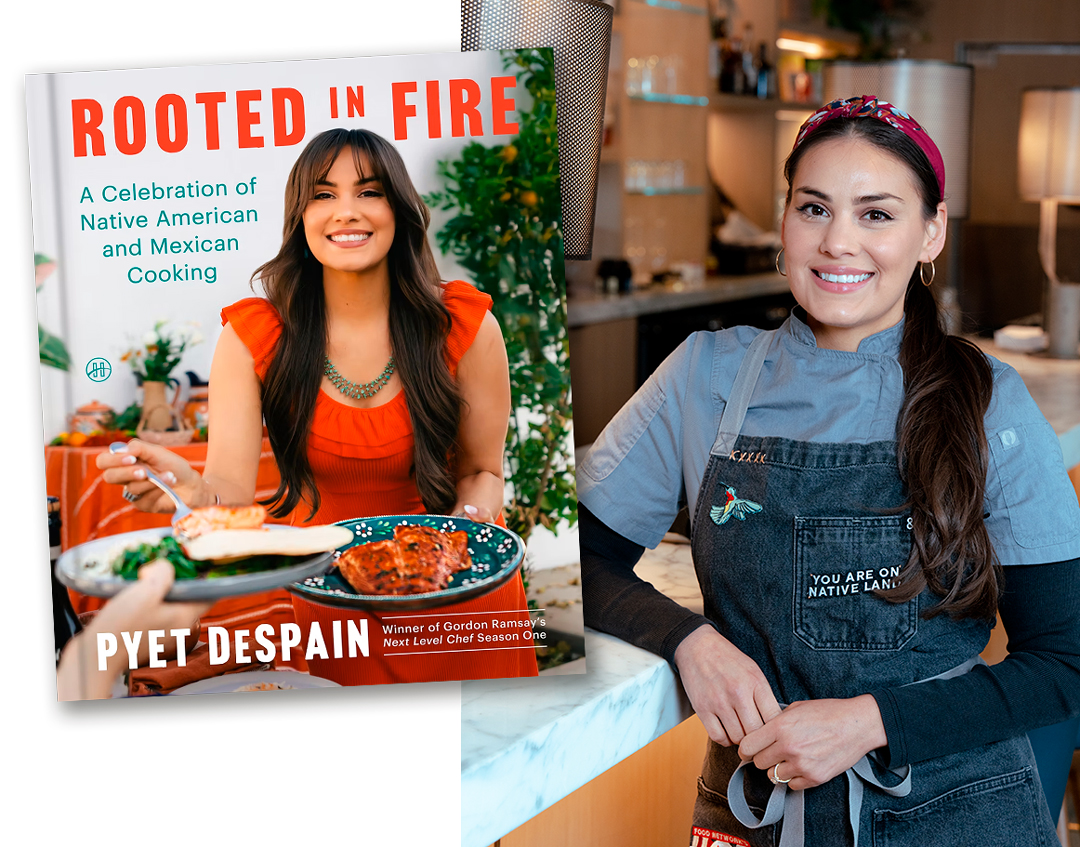
Rooted in Fire: A Celebration of Native American and Mexican Cooking
By Pyet DeSpain
For some, fusion has become a dirty word, but for Pyet DeSpain, the concept is central to her reckoning with her family history and identity. As a person who grew up partly on the Osage reservation and partly in Kansas City, with Mexican ancestry on both sides and a city-living Native grandfather obsessed with hunting, she’s not drawn to absolutes. She describes the recipes in Rooted in Fire as “a fusion of Native American and Mexican flavors that aims to bridge the gap between ancient wisdom and modern kitchens.” That means that an extremely enticing recipe for bison jerky (no smoker required) is closely followed by a bison colorado; there’s a purslane (verdolagas) and apple salad and a grilled corn that strikes me as the perfect dairy-free take on elote, and then there’s a recipe for the Lakota-inspired berry compote, or wojape, that DeSpain paired with a Wagyu burger the night she won Next Level Chef. Although I’m not normally one to go for fruity salsas, her strawberry salsa (paired with a fry bread taco for the brunch challenge on the show) is the first thing I will make if and when I come across nice strawberries this summer, and I’m flagging the “Teas and Spirits” section for novel summery drinks, alcoholic and nonalcoholic both. But first, I’m going to spend some more time with DeSpain’s deeply unpretentious stories.