An embarrassing admission: In recent months, I have tumbled down the online rabbit hole of viral recipe videos. The amount of time I’ve spent watching videos that claim they’ll save me tons of time cooking is, well, laughably counterproductive. But apparently, I can never have enough “Easiest EVER Sheet Pan Pasta” dishes in my repertoire.
Not all YouTube cooking channels are full of empty promises. One that has stood the test of time for me is Rainbow Plant Life, made by the lawyer-turned-vegan-recipe-developer Nisha Vora. Not only does Vora prioritize packing as much flavor into her dishes as possible, but she’s uninterested in doing the whole “it tastes just like the meat version!” song and dance that I find frustrating (and dishonest) in some vegan cooks’ appeals to their audiences. Don’t get me wrong, I will happily inhale an In-N-Out–style burger from Lucky Goose—but in general, the best vegan dishes I’ve had are those that don’t attempt to be a one-for-one replacement for a traditionally meaty recipe.
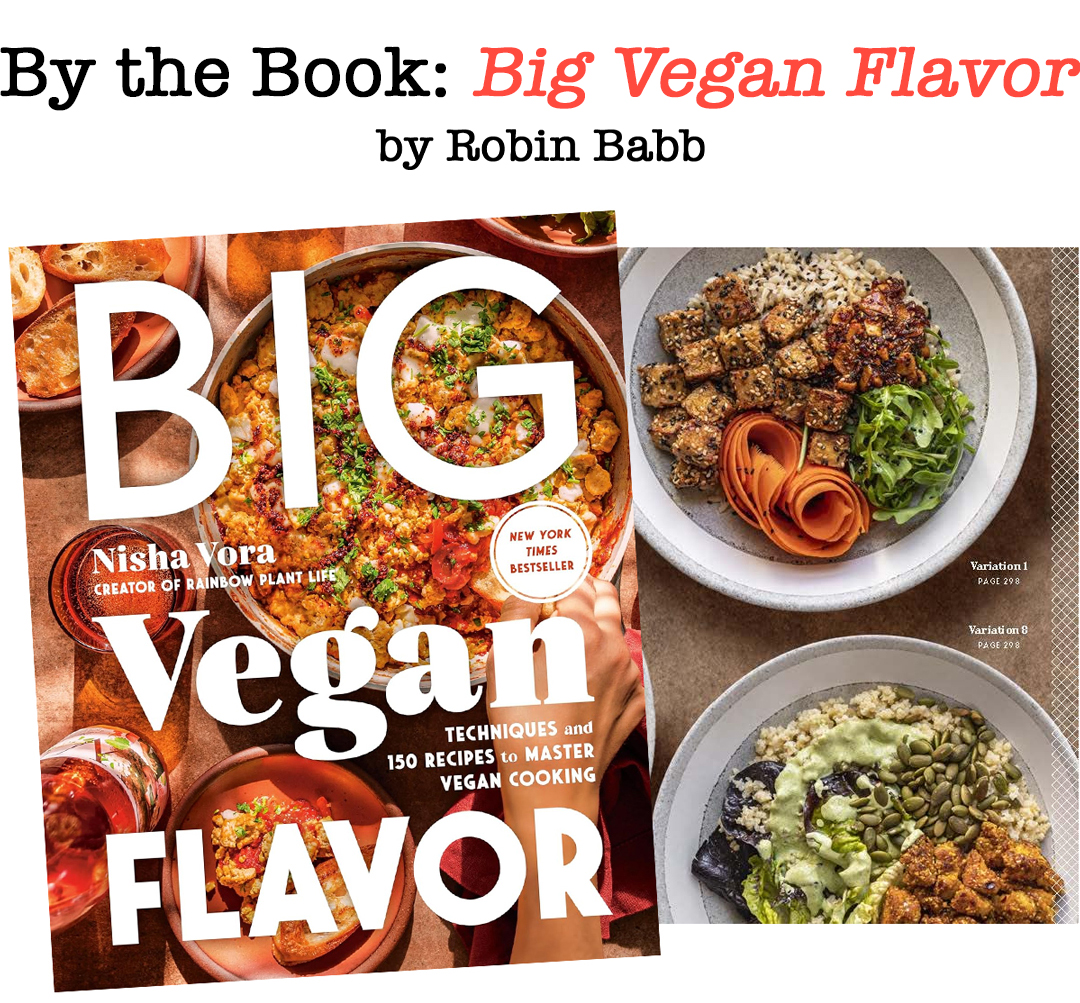
This is why I was excited to learn last year that Vora was publishing her first cookbook, Big Vegan Flavor. Because she draws a lot of her culinary inspiration from the Indian food of her childhood—much of which is incidentally vegan, or nearly so—her recipes rarely involve faux meat and instead focus on, as the title would imply, lots and lots of flavor. Building flavor requires time and effort, and getting the most out of this book requires the same. As she says in the intro, quoting advice that her mother gave her when she was first learning to cook, “Don’t ever trust a recipe that says to cook the onion for two minutes; you can’t do anything to onions in two minutes.” Too, I’d suggest going through it in order rather than jumping around to random recipes, as Vora’s dishes often build upon each other and require techniques or components that she lays out in the early pages.
The first section of the book, “Mastering Vegan Cooking,” serves as both a solid index of flavor-boosting vegan pantry staples (miso and nutritional yeast get briefly explained, as well as some less-familiar ones like Chinese black vinegar, preserved lemons, and kala namak) and also a smart and approachable guide for techniques that are applicable to all cooks: when to add vinegar or other acid to a dish, how to bloom spices in oil for a fragrant finishing touch, and a compendium of the particular merits and spice levels of many fresh and dried chiles. Since she started, Vora’s videos and recipes have been less about big, fancy dishes to serve at a dinner party and more about smart prep work and mastery of some culinary principles that make it easy and intuitive to whip together meals that are a step above whatever viral sheet pan pasta recipe is going around.
The second section and, to my mind, the most useful, is “The Building Block Recipes.” Vora’s cooking philosophy involves a lot of easily swappable components—this protein with that grain with that veg and that dressing, then spin the wheel and match ‘em up differently. This is very much a meal prepper’s approach—make a big batch of lentils on Monday and you can have them over rice for dinner, then in her version of a crunchwrap the next day, and then roasted into a (surprisingly tasty) crispy salad topper the day after that. The cashew cream can be iterated on indefinitely: The lemon-basil variation goes well on a spicy dish that could benefit from some coolness, and the chipotle one is especially good over black beans. The Edamame Salad with Chile Crisp is good on its own, or served alongside soba noodles or fried rice; the Creamy Tahini Lentils with Crispy Spiced Garlic are worthy of heavy rotation, and its components (the Pomegranate Tahini Sauce and the Crispy Spiced Garlic) will go great on top of just about anything.
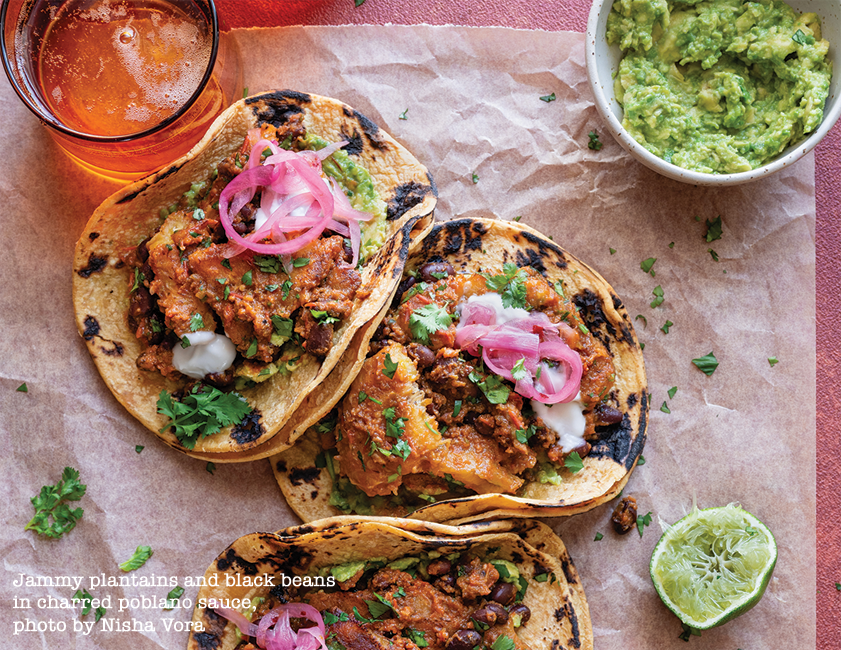
Section 3 is “Wow-Worthy Meals,” i.e., the dinner-party recipes: Malaysian Curry Noodle Soup, Creamy Chickpea Spinach Masala with Tadka, and Jammy Plantains and Black Beans in Charred Poblano Sauce, just to name a few. Here is where your investment in prep work will pay off, as having some homemade pickled red onions and a jar of Quick Miso-Chile Hot Sauce in the fridge can make the Mushroom Carnitas Tacos into a weeknight dinner recipe rather than a whole laborious to-do. And while this might make it sound like these recipes require total buy-in to a system of Vora’s creation, I think she’s just illustrating a broader idea: “meal prepping” doesn’t necessarily mean eating the same thing for five days in a row. It means setting yourself up for success with a little bit of advance charring and sauce making, so that your dinnertime self will feel like a genius. A well-fed genius.
Who’s Your Source?
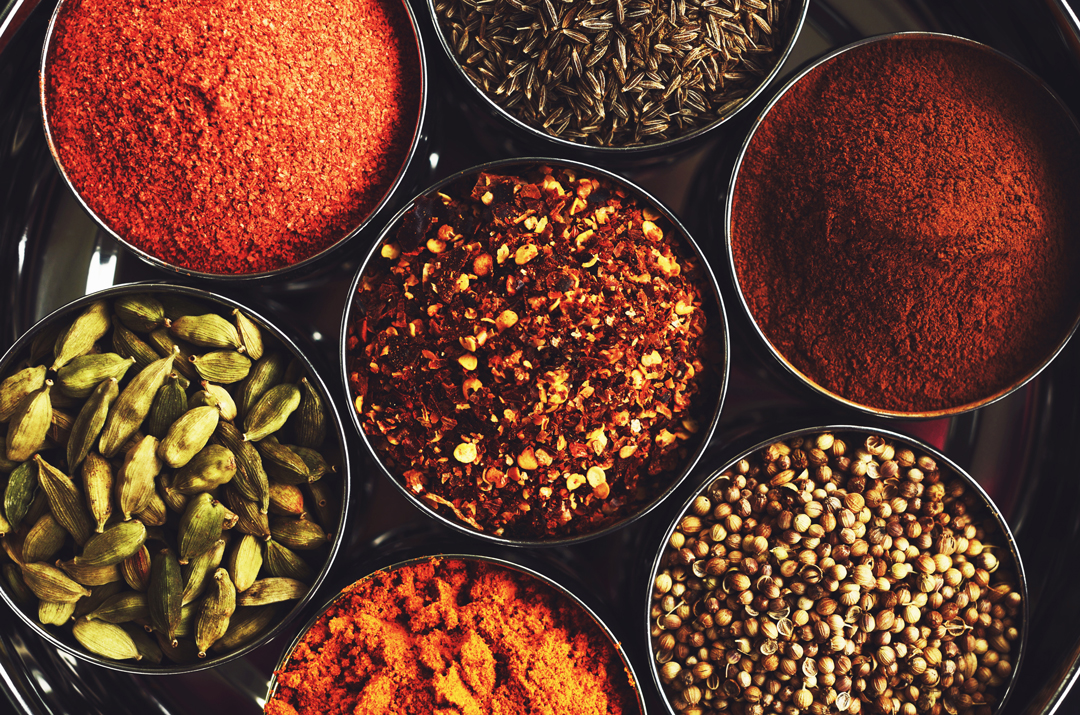
Most of the ingredients used in Big Vegan Flavor’s recipes are fairly easy to come across at your standard grocery store these days. But there are, as I said, many Indian-inspired dishes in the lineup, so you might want to pay a visit to Albuquerque’s Bombay Spice to pick up black sesame seeds and kala namak (Indian black salt). In Santa Fe, Savory Spice Shop on Galisteo will provide you with many, if not all, of the same—it is a chain store, yes, but I’ve always found the owner of this location to be kind and knowledgeable. For an online source, Vora vouches for (and I agree) Diaspora Co., a spice company that takes ethical sourcing and paying farmers a fair wage seriously.
For some of the Mediterranean-inspired dishes, you might want to pay a visit to Alquds in Albuquerque—a restaurant serving some of the best hummus and shawarma I’ve had that doubles as a small Middle Eastern grocery where you can get packaged goods like sumac, urfa biber, and pomegranate molasses. I’m unsure of the equivalent in Santa Fe—but if you have a place you like for such things, drop me a line at robin@ediblenm.com.
Robin Babb
Robin Babb is the associate editor of edible New Mexico and The Bite. She is an MFA student in creative writing at the University of New Mexico and lives in Albuquerque with a cat named Chicken and a dog named Birdie.