The Vegan Creamery
by Miyoko Schinner
As I was shifting to a plant-based diet in 2013, one of the most frequent questions I got was, “You’re from Wisconsin and you’re not going to eat cheese?” After twenty-three years of gorging on all varieties of sharp and aged cheddars, squeaking my way through fresh and fried cheese curds with regularity, and guzzling 1 percent milk with most meals, my choice was as much for health reasons as it was in response to concerns about the inhumane treatment of animals and the environmental impacts of raising livestock.
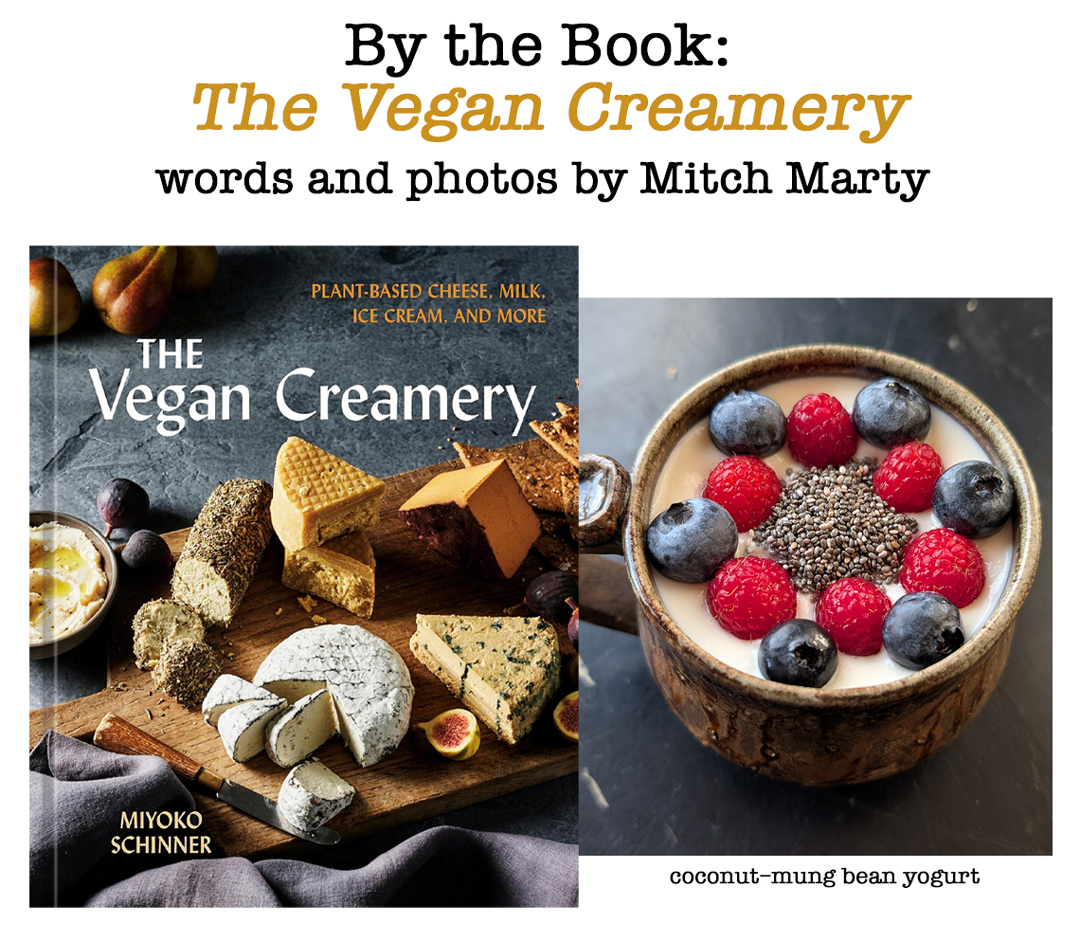
I was surprised, when reading the introduction to Miyoko Schinner’s newest cookbook The Vegan Creamery, to learn that cheese is mildly addictive by its nature. The milk protein casein breaks down during digestion into casomorphin, a natural opioid. While I experienced my own brief void without “real” cheese when I first went vegan, I’d always assumed it was due to the quality of nondairy alternatives at the time—but perhaps there is more to the question of giving up cheese than I originally considered. Although I have no desire to consume dairy now, and enough years have passed that I suspect I am beyond any biological drive I may have had, I still find myself drawn to the taste, texture, and flavor of cheeses. While commercially available nondairy alternatives have improved immensely in all of these areas, and artisan vegan creameries even exist in cities like Minneapolis (The Herbivorous Butcher) and Austin (Rebel Cheese), it wasn’t until I encountered this book that I entertained the idea that I could experiment with making cheese on my own.
The Vegan Creamery is as much an homage to fromage as it is a testament to the artistry and science behind working with whole ingredients, and to the culinary history of nondairy-derived milks that have been used for thousands of years. Miyoko Schinner, the founder and namesake of Miyoko’s Creamery, approaches this by breaking down an array of ingredients and providing insight into their properties and uses. Although I’ve tinkered with making my own almond, hemp, and cashew milk in the past, I never thought beyond the surface of those recipes to how the varying properties of fat and protein content might impact the way to best use them. What I appreciated so much through Schinner’s guided exploration of ingredients—including bacteria, coagulants, and molds—was how excited it made me to start working with them. And full disclosure, I have never been excited about mold.
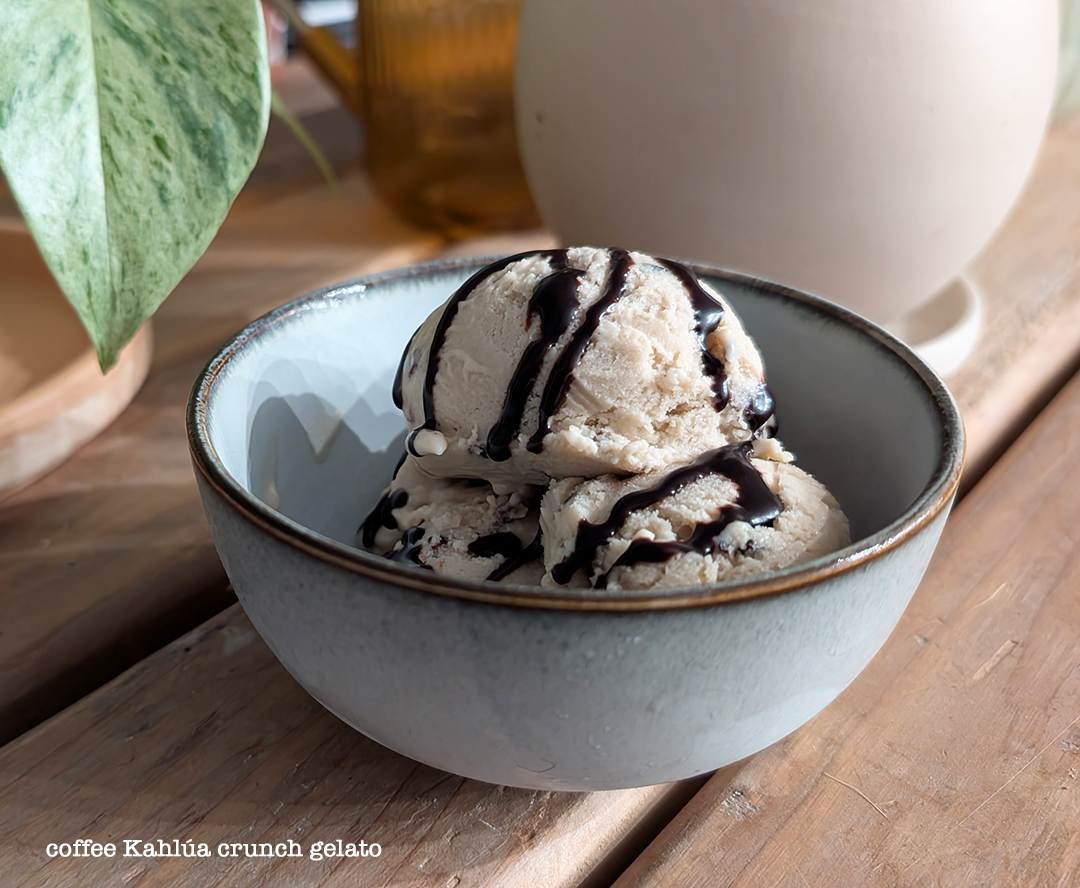
Fast cheeses, which are cultured or fermented but offer a lower threshold for novices to work with, and aged or ripened cheeses, those that require a little more preparation and patience, make up a portion of the recipes in The Vegan Creamery. However, unlike Schinner’s first cookbook, Artisan Vegan Cheese, they are not the sole focus. As someone with a sweet tooth, I dove headlong into ice creams and gelatos first, putting together a batch of the coffee Kahlúa crunch gelato before pivoting to milks, which range from barley to melon seed to more barista-style creamers. Butters, spreads, yogurts, and no-waste recipes that include the pulp left over from making plant milks, in addition to a small selection of recipes like cacio e pepe that incorporate these milks and cheeses, comprise the rest of the cookbook.
Schinner mentions striving to make these processes accessible at home with a few key kitchen appliances and common items, and a high-powered blender seems an essential place to start given how many of the recipes call for one. She also provides alternative methods when it is possible to bypass the use of specific equipment. For instance, I tucked a jar of coconut–mung bean yogurt into a couple of blankets and set it by my floor heater to ferment overnight, because I don’t have a proofing box (only to realize the next morning that I have a yogurt setting on my Instant Pot). For anyone planning to regularly make cheeses, a cheap proofing box or a dehydrator would be a great investment to be able to better control a consistent, low heat during any of the recipes’ fermentation—I have already been inspired to research dehydrators and eagerly await my first taste of the parmacasio (a grateable, Parmesan-like cheese that incorporates green olives and olive brine) that will need to age for 8–12 weeks.
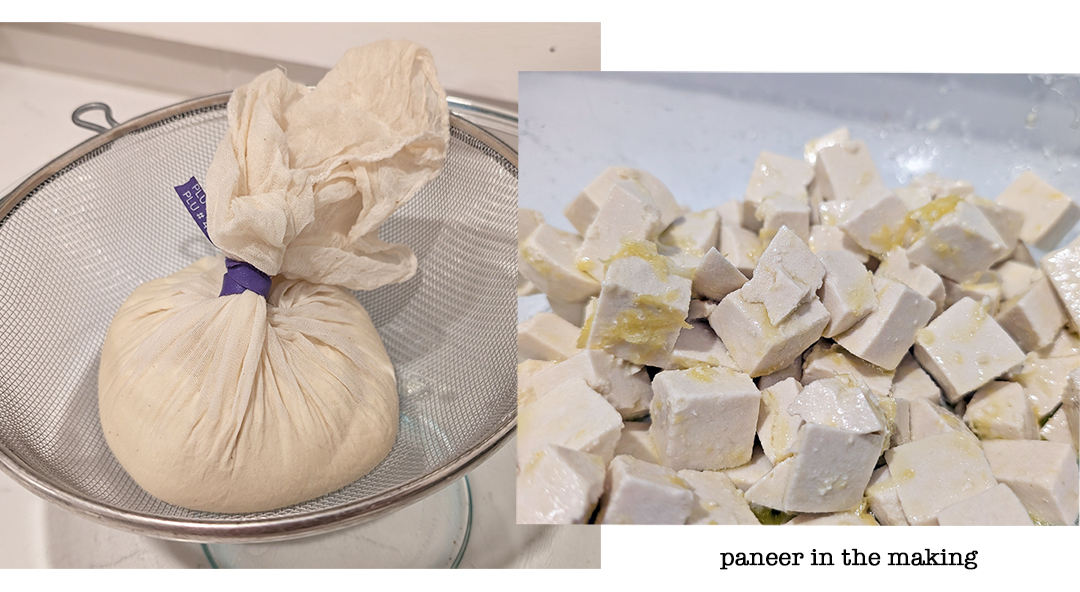
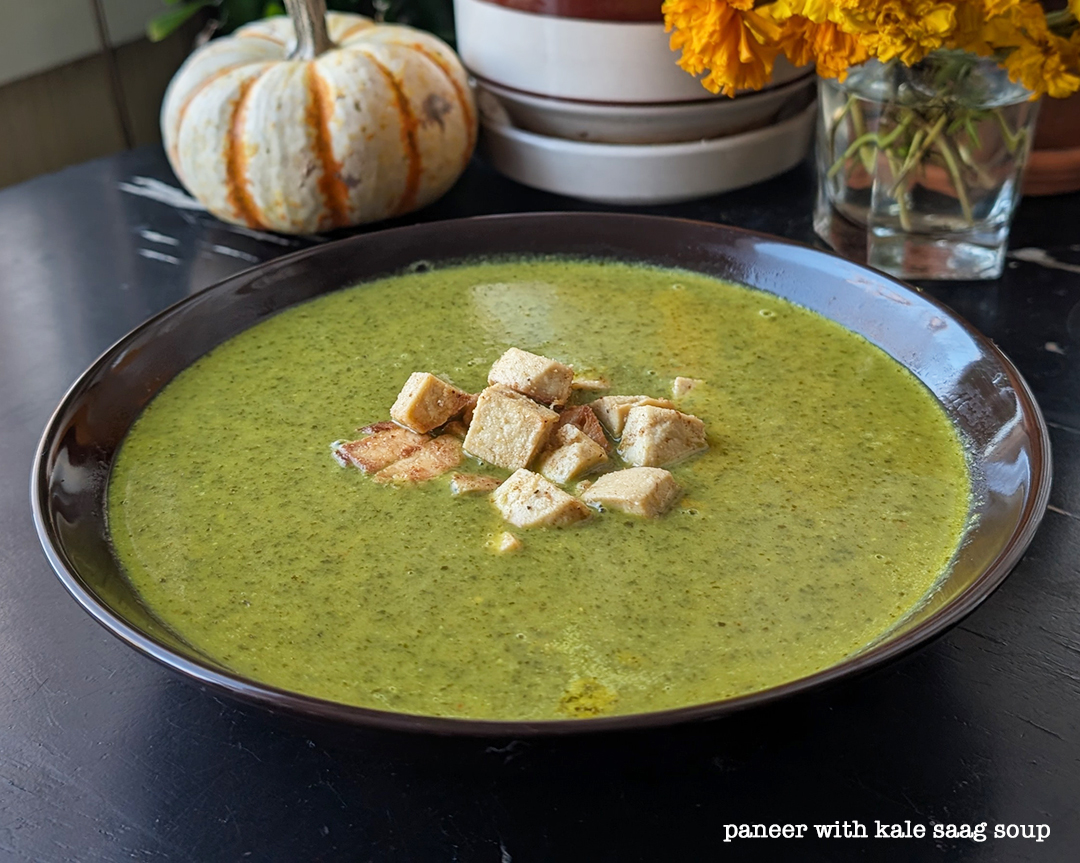
Those who are looking to experiment with dairy alternatives at home, who are interested in learning the science and techniques behind these processes, are in good hands with The Vegan Creamery. This comes as no surprise given that Schinner first developed her plant-based cheeses in the 1990s and has a genuine passion for sharing her knowledge to inspire others to embark on their own journeys. As nervous as I was about working with unfamiliar ingredients, especially those meant to culture and coagulate and ferment, Schinner offered detailed explanations that prepared me to approach this. As I crafted my first fast cheese, the paneer I would later use for a kale saag soup, I knew I could trust the process given the science she so clearly articulates and the care she works into every recipe.
Who’s Your Source?
Many of the basic ingredients, such as common nuts and seeds, can be purchased at mainstream grocery stores, and some of the specialty ingredients can be purchased locally through La Montañita Food Co-op, Natural Grocers, or Talin Market. These include multiple types of white miso, citric acid, psyllium husk, potato and tapioca starches, agar powder (Natural Grocers and Talin Market), and yellow split mung beans and shio koji (Talin Market).
Other things may not be available locally, such as lactose-free bacterial cultures, molds, and watermelon seeds. Thankfully, Schinner provides a resources section to point folks toward online sources for these. These include The CheeseMaker (cultures, molds, additives, supplies, and watermelon seeds), Shay and Company (shea and cocoa butter), Pure Indian Foods (moong dal), and Modernist Pantry (additives such as kappa carrageenan and lactic acid).
Mitch Marty
Mitch Marty is a writer and photographer from rural Wisconsin. He now resides in Albuquerque and holds an MFA in Creative Writing from the University of New Mexico.